
“If I pay to promote a video, will YouTube punish the channel?” It is the most common question creators ask before spending a dollar on ads, and the answer has been muddied for years by one viral video and a lot of secondhand retellings.
This guide traces where the fear came from, what the famous 5-million-view experiment actually showed once you separate bots from real ads, what YouTube itself says about ad views, and how to promote a video so the new viewers are people who stay.
Where did the fear that YouTube ads hurt your channel come from?
Most of the fear traces to a single video: “Youtube Is Broken – How To Kill A Youtube Video” by The Spiffing Brit, published March 27, 2023. He argues that anyone can run deliberately mistargeted ads on another creator’s video, flood it with viewers who click away, and trick the algorithm into throttling it. With more than 1.3 million views as of September 2026, its thesis got compressed by repetition into “ads hurt your channel”.
Two things get lost in that compression. First, the video is about weaponized, badly targeted ads pointed at someone else’s video, not a creator promoting their own work to a relevant audience.
Second, his evidence was one screenshot: daily views falling from roughly 1,500 to 3,000 per day to a few hundred after the ads ran. A later analysis of the same screenshot read the organic decline as already under way before the ads started.
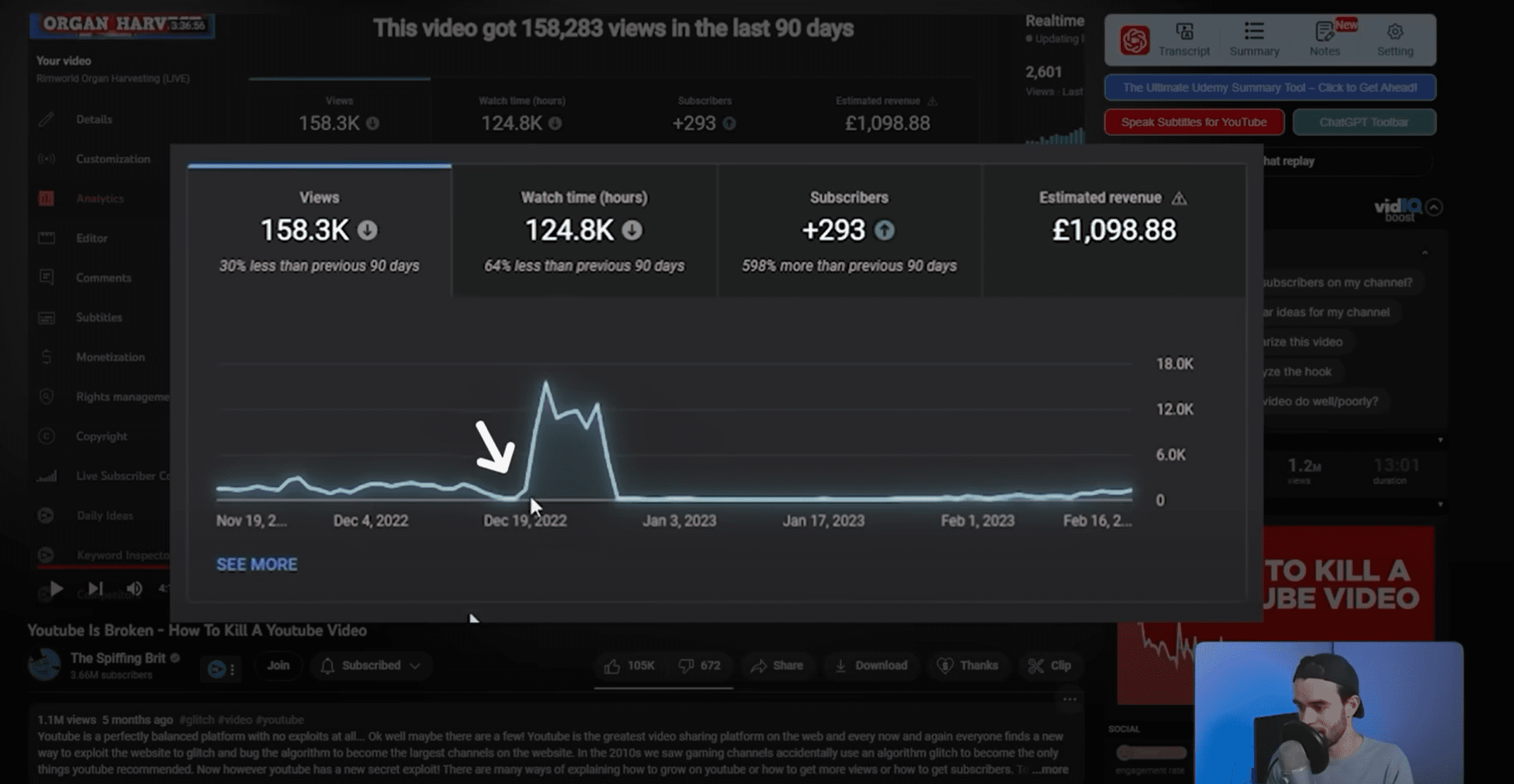
That is one analyst’s reading, not a statement from YouTube, but it is the reason the “proof” behind the fear is weaker than its reputation.
What did the 5-million-view experiment actually show?
A YouTube growth creator bought around five million views through three separate methods and published the results. The original upload is no longer available on YouTube as of September 2026, but UNILAD Tech and Supercar Blondie both re-examined it in February 2026. The three methods behaved very differently, which is the part most summaries skip.
| Method | What it is | What the test found |
|---|---|---|
| Bot views | Automated scripts from a view-selling site, about $26 per 10,000 views | The public view count rose. Watch time, subscribers, and click-through rate did not move at all. |
| YouTube Studio Promotions | YouTube’s own simplified ad tool, run on about $100 | Plenty of impressions, a modest number of views, and a noticeable bump in subscribers, but most viewers did not stay long. |
| Google Ads campaigns | Skippable in-stream and in-feed ads run over multiple campaigns | The source of the large majority of the five million views, all real viewers. The organic lift that followed depended on how each video held them. |
Two conclusions came out of it. The first is the one most people remember: the test found no strong evidence that paid views permanently damage organic reach, and the promoted videos kept growing organically alongside the ad views.
The second is the useful one. Ad views introduce the video to new people, and the recommendation lift that follows is earned by how those people respond. Ads find the audience; the video keeps them.
What the promoted videos’ own analytics showed
The creator shared the traffic-source chart from three of the promoted videos. In each one, the organic lines keep their shape while the paid line arrives and then stops.
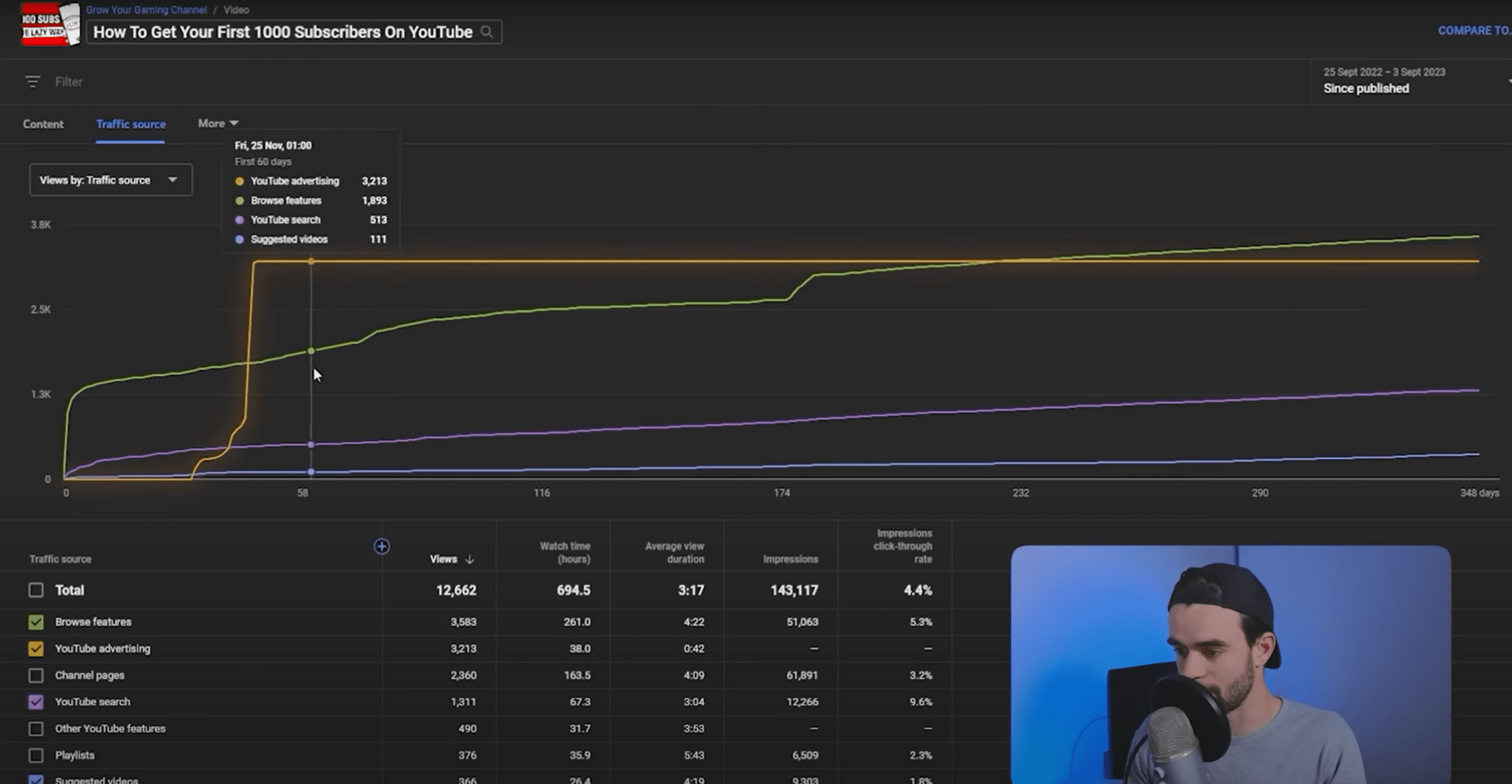
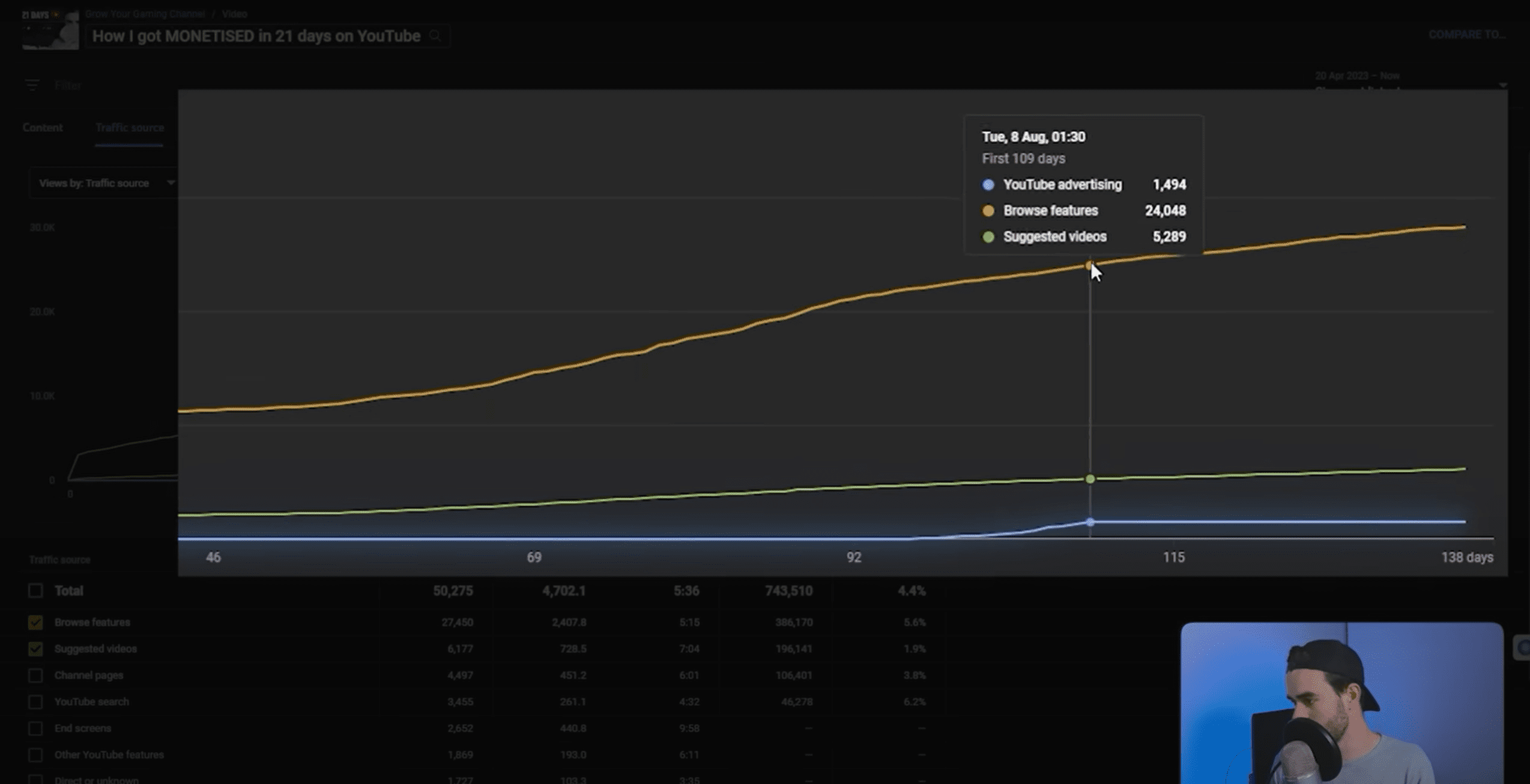
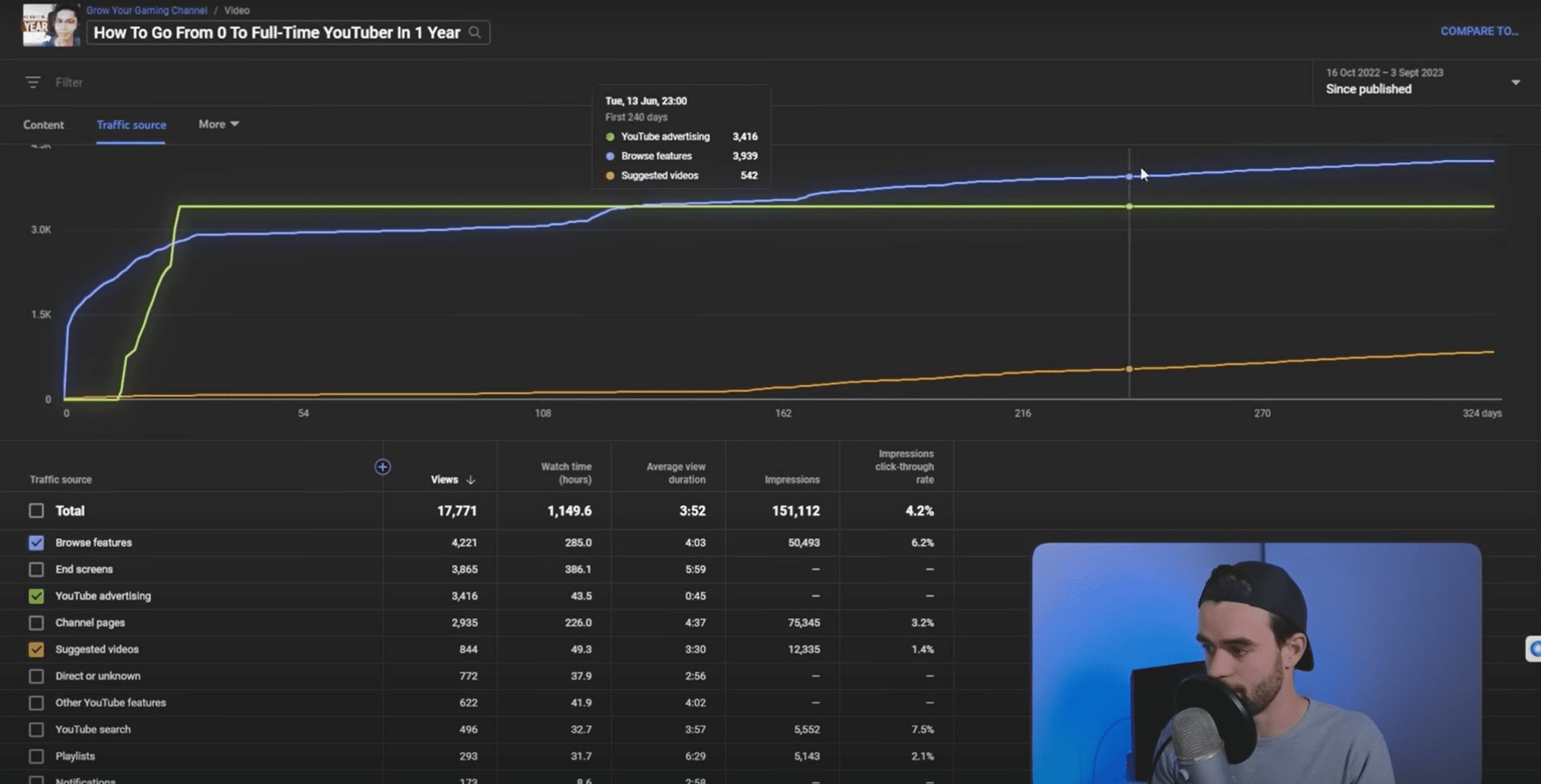
Why the video decides: ad viewers arrive cold, and only the ones who stay send organic signals. So the targeting has to find people who would choose to watch.
Sprizzy does exactly that, targeting by keywords, similar channels, location, age and gender, and has done it for over 1.5 million channels since 2016.
What does YouTube say ad views are?
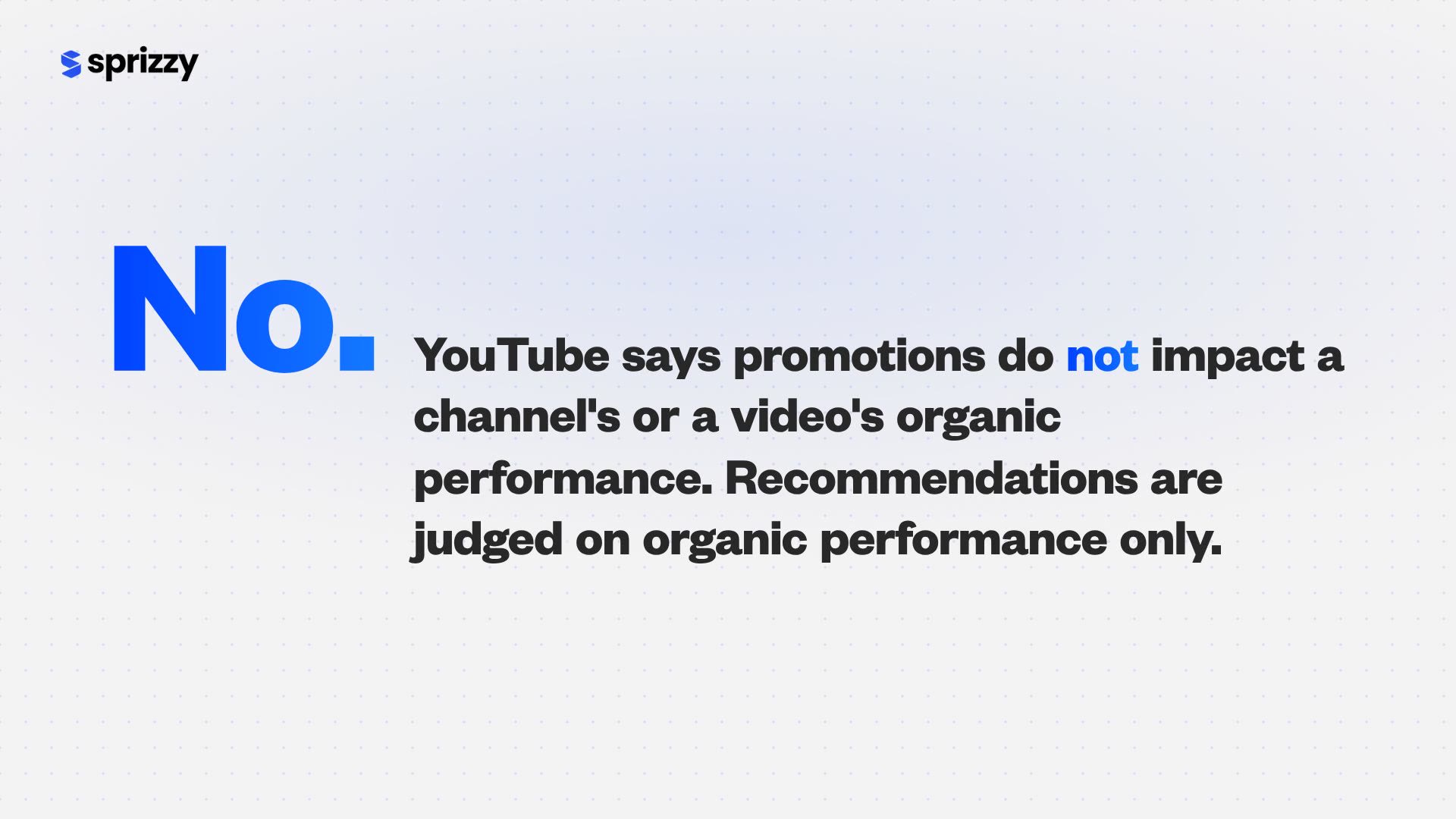
YouTube answers this in the official help page for Promote, its ad tool on the Google Ads platform Sprizzy uses: “No, promotions don’t impact your channel’s or a specific video’s organic performance. Organic recommendations are based on how content performs when it’s recommended organically, not when it’s run as an ad.” The same page calls all views and subscribers gained through a campaign legitimate, which covers the Google Ads campaigns Sprizzy runs.
YouTube’s own words: ads do not impact your channel’s or your video’s organic performance.
A view versus a signal. Ad views are real views from real people. They appear in YouTube Analytics under their own traffic-source row, “YouTube advertising”, with an organic versus paid filter in the content performance report.
The organic recommendation system is judged separately. YouTube’s recommendation system overview says it is built on what viewers choose to watch, ignore or dismiss, how long they watch, and their likes, shares, comments and survey responses when a video is shown organically.
How is a paid view counted?
The threshold differs by format, per YouTube’s page on ads and view metrics.
| Ad format | When Google Ads counts a paid view |
|---|---|
| Skippable in-stream | Viewer watches 30 seconds, or to the end if shorter, or clicks an element of the ad |
| In-feed video | Viewer clicks the thumbnail to the watch page, or watches the inline autoplay for at least 10 seconds |
| Shorts ads | Viewer watches 10 seconds, or to the end if shorter, or taps the call to action |
Since August 24, 2026, the public view count on the watch page increments the moment any video starts playing, including when it plays as an ad. The stricter figures live on as engaged views in Analytics.
That is why Google Ads, YouTube Analytics and the public counter can show different numbers for one campaign. Google says the variance is expected; see why paid views and Analytics differ for each counter, and views versus engaged views for the August 24 change.
Do YouTube ad views count toward monetization?
No. YouTube’s Partner Program eligibility page lists “ad campaigns” among the watch hours and Shorts views that do not qualify, alongside private, unlisted and deleted videos. What does count is what those viewers do next: an ad viewer who comes back through search, subscriptions or the home feed generates organic watch time that qualifies. Ads find the audience, and the organic watching that follows is what moves you toward the bar.
The bar is rising. The current long-form threshold is 1,000 subscribers plus 4,000 qualified public watch hours in 12 months, and from February 1, 2027 new applicants will need 8,000 hours. Our monetization requirements guide covers the full checklist.
Budget ads for reach and new subscribers. The return visits they bring are the watch time that counts.
Can ads hurt your retention or recommendations indirectly?
Ads cannot suppress your organic recommendations, but badly targeted ones can make your blended analytics look worse and spend your budget on people who leave. If the audience is wrong, ad viewers drop off early and the video’s overall average view duration falls. YouTube says organic recommendations are judged on organic performance, so that blended number is not what the algorithm reads. It is only what you see in Studio.
Read by traffic source, not in aggregate. Compare the “YouTube advertising” row against browse, suggested and search separately:
- Expect ad viewers to behave differently from subscribers. They arrived cold, they did not choose you, and some will skip.
- The experiment’s Promotions and Google Ads results both showed this pattern: real views with shorter watch time than organic traffic. That is normal advertising behavior, not a penalty.
- The fix is targeting. The closer the ad audience is to your organic audience, the closer the two retention curves sit.
This is exactly what Sprizzy is for: you pick the video and who should see it, and it runs the campaign on YouTube’s own ad platform, real viewers only, no bots, from $50. It tests 200+ audience combinations and removes the low performers every hour.
YouTube’s fake engagement policy bans inflating views, likes or subscribers through automated systems. Bot views like the $26 batch in that test break it and can end in strikes or termination. Google Ads campaigns are allowed: YouTube delivers each view to a real person.
How do you promote a video without hurting your channel?
Treat ads as a way to introduce a video to a specific new audience, then judge the video on how those people respond. Buy attention from people who would plausibly have watched anyway, so ad retention tracks organic retention. If you are still deciding whether to spend at all, is it worth paying to promote a YouTube video? covers what $50 buys and how to run a first test.
- Only ever pay YouTube’s ad system. Sprizzy runs every campaign through Google Ads, YouTube’s official ad platform, so every view comes from a real person. Never use a site that sells views by the thousand, no matter how “real” it claims they are.
- Promote a video that already retains. Pick one whose organic retention curve is healthy. Ads amplify what is there; they do not fix a weak opening.
- Target by interest, not by size. Aim at viewers of similar channels and at keywords your video answers. Broad targeting is exactly the “mistargeted ads” scenario from the 2023 video.
- Prune audiences that do not watch. Turn off placements and audiences that produce short views. Sprizzy does this automatically every hour, and you can remove any audience yourself from the report.
- Read the “YouTube advertising” row on its own. Compare it with your organic traffic sources, and give Analytics up to 72 hours to reconcile. Every Sprizzy view is verifiable in your own YouTube Studio analytics.
Test it with a small budget. Sprizzy campaigns start at $50, there are no subscriptions or recurring fees, and your first campaign comes with a money-back guarantee.
If the channel belongs to a business, the setup work comes first: a Brand Account, the channel links, and videos that answer what customers already search for. We covered that in how to use YouTube to promote your business.
The ads will not touch your organic reach. They put the video in front of the right people, and the video earns the rest. To judge what a campaign is costing you, see what a good cost per view for YouTube ads is.
Common questions
Does using YouTube Promotions kill your channel?
No. YouTube's Promote FAQ answers this directly: promotions do not impact your channel's or a specific video's organic performance, because organic recommendations are based on how content performs when it is recommended organically, not when it runs as an ad. Promotions run on the same Google Ads platform Sprizzy uses. Promote gives you one goal and a budget; Sprizzy targets by keywords, similar channels, location, age and gender and runs it for you, from $50.
Do YouTube ads hurt your channel's algorithm?
No. YouTube's help page for Promote, its built-in ad tool on the same Google Ads platform Sprizzy uses, says promotions do not impact a channel's or a specific video's organic performance, because organic recommendations are based on how content performs when it is recommended organically, not when it runs as an ad. Ads add real viewers on top of organic traffic; they do not change how the recommendation system judges the video.
Are views from YouTube ads real views?
Yes. YouTube states that all views and subscribers gained through a Promote campaign are legitimate, and the same delivery system serves Google Ads campaigns. A skippable in-stream view is counted after 30 seconds or a click, and in-feed and Shorts ad views after 10 seconds or a click. They show up in YouTube Analytics under the traffic source labeled YouTube advertising, so you can verify them yourself.
Do YouTube ad views count toward the 4,000 watch hours?
No. YouTube's Partner Program eligibility page lists ad campaigns among the watch hours and Shorts views that do not qualify, and the Promote FAQ says watch hours and subscribers gained through ad campaigns do not count toward YPP thresholds. That is true for the current 4,000-hour bar and for the 8,000-hour requirement that applies to new applicants from February 1, 2027.
Can someone hurt my video by running bad ads on it?
That is the scenario a viral March 2023 video described, using mistargeted ads to flood a video with viewers who leave. YouTube's position is that organic recommendations are based on organic performance, not on how a video performs as an ad, and a later analysis found that the decline in that video's chart had started before the ads ran. Watch your Analytics by traffic source if you suspect it.
Why does my ad view count differ between Google Ads and YouTube Analytics?
YouTube says some variance between Google Ads, YouTube Analytics and the public watch page is expected. The three systems update at different speeds, apply different spam filters, and count views differently: since August 24, 2026 the public counter increments the moment a video starts playing, while Google Ads bills on longer thresholds. Allow up to 72 hours for Analytics to reconcile before comparing.
Is buying YouTube views the same as running YouTube ads?
No, and the difference is the whole story. Buying views from a third-party site means bots or paid clickers inflate the counter, which violates YouTube's fake engagement policy and can lead to strikes or termination. Running ads means paying YouTube to show your video to real people through Google Ads, which YouTube explicitly treats as legitimate. The 5-million-view test showed the first moved only the view count.
Will people who see my video as an ad subscribe?
Some will. In the 5-million-view experiment, YouTube Studio Promotions produced a noticeable bump in subscribers even though most ad viewers did not watch for long, and Google Ads delivered real viewers at scale. How many convert depends on the video and the targeting, which is why no ad platform or promotion service can guarantee a subscriber count. Treat subscribers from ads as a bonus, not the metric you buy.