
No form, no contact, no fee. The only way onto the shelf is to look like an artist on the rise to the systems that pick. YouTube has published what they look at: a subscriber floor, two countries and three factors you can move.
Why can’t you apply for the shelf?
Because YouTube picks, you do not. Its help page says emerging artists with over 1,000 subscribers in supported countries “are automatically eligible to be featured on Artist on the Rise, there is no application process” (YouTube Help). The supported countries are Canada and the United States. The shelf is refreshed only a few times a week, so most eligible channels are waiting most of the time.
| What you need | YouTube’s rule | Where it is read |
|---|---|---|
| Over 1,000 subscribers | “Emerging artists with over 1,000 subscribers” | Your channel’s count, after any merge |
| A supported country | Canada or the United States | Channel location, or where you upload from most often |
| New music videos | The shelf shows “new music videos from emerging artists” | Your recent uploads |
| A music channel | The page is written for artists; a music note is not listed as a condition | An Official Artist Channel is where your merged count lives |
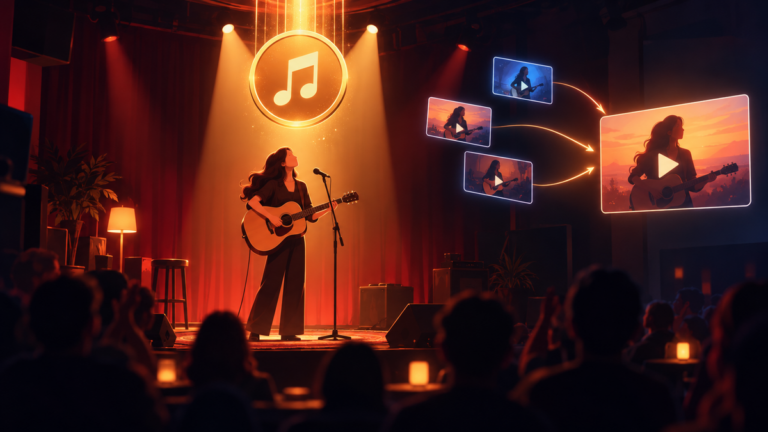
What a feature gives you. For 24 hours your new video sits on the shelf of the Music Explore page, and a blue badge appears beside your channel name. YouTube says to expect more channel visitors than usual on that day.
The 1,000 figure is a floor, not a target. When the spotlight launched in January 2017, YouTube noted that over 1,000 creators passed 1,000 subscribers every day (YouTube blog). The shelf takes a few a week, so the three factors below decide.
What do the three selection factors actually measure?
View count, watch time growth and upload frequency, in YouTube’s own words: “View count, watch time growth, and how often videos are uploaded are some factors we look at.” Two of the three are rates, not totals. Watch time growth compares this period with the last, and upload frequency is a cadence. A channel with a modest audience that is rising fast and releasing steadily is the profile the shelf exists to find.
- View count. Views on the new music video, the thing the shelf promotes. For a release, Real-time activity in Analytics for Artists shows estimated views for the last 60 minutes and the last 48 hours (YouTube Help).
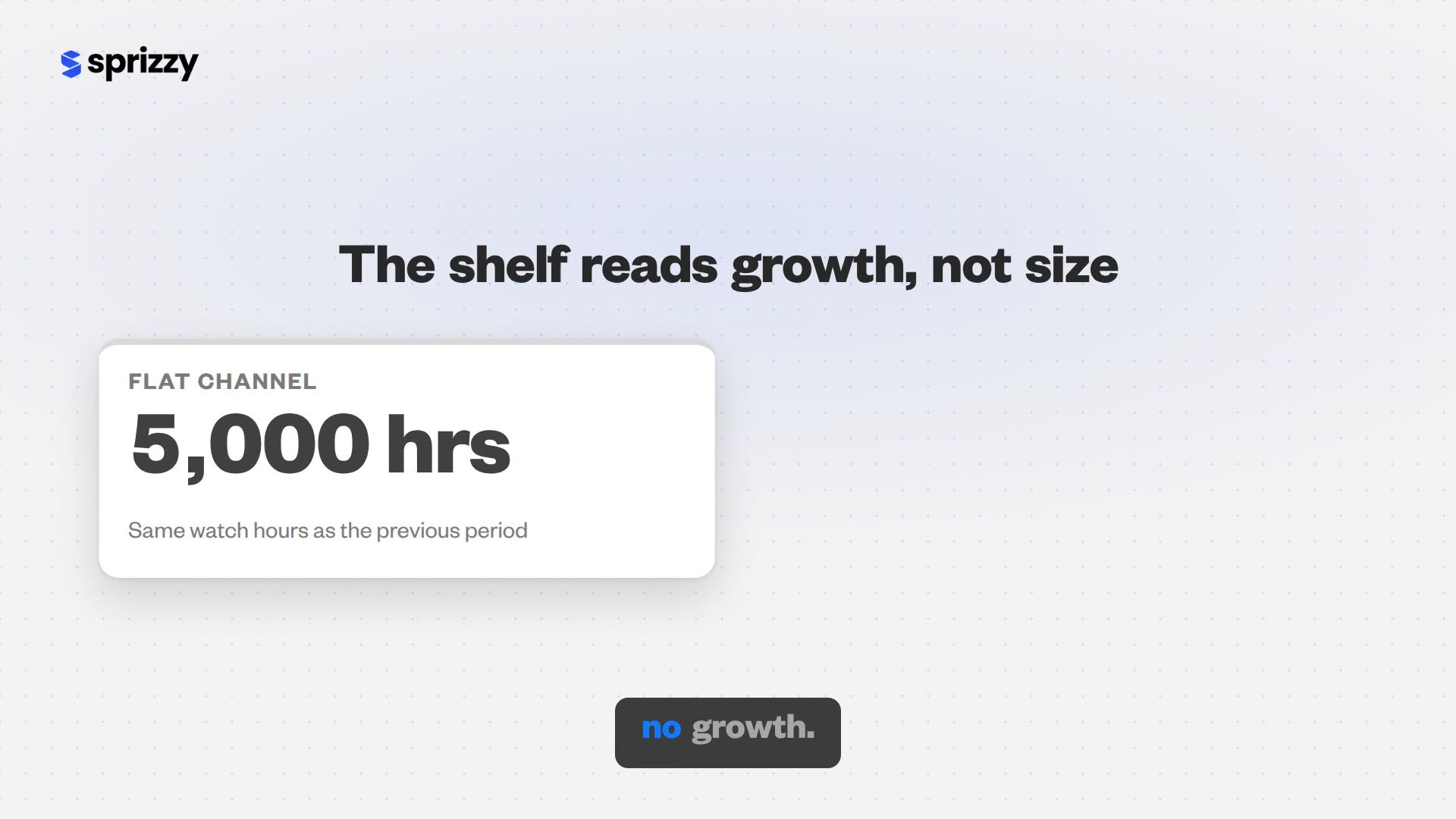
- Watch time growth. Watch hours in the Engagement tab, set against your previous period. Growth is the word YouTube chose, so a channel going from 300 to 900 watch hours in a month shows it, and a flat 5,000 does not.
- Upload frequency. How often new videos arrive. YouTube’s own release guide recommends supporting visuals “every few weeks” plus Shorts at a regular cadence (YouTube for Artists).
Where a promotion lands. A campaign on the new video adds views and watch time in the weeks after release, exactly when the shelf is looking for new music videos.
Sprizzy puts the video in front of people who already watch artists like you, through YouTube’s official ad platform, real viewers only, no bots, from $50.
Those views appear in your own Analytics under the “YouTube advertising” traffic source, so you can see exactly what the launch added.
Is the shelf the same as the monthly program and the video series?
No. Three different things have carried the name since 2017, and only the shelf is open to every eligible channel. A Trending-tab spotlight launched in January 2017, a monthly artist program with billboards and fan events followed in May 2018 (YouTube blog), and an interview series produced with Genius began in March 2019 (YouTube for Artists). The help page describes the shelf, which lives on the Music Explore page today.
| Program | Who gets in | What it gives |
|---|---|---|
| The shelf | Automatic: over 1,000 subscribers, Canada or the US | 24 hours on the Music Explore page and a blue badge |
| The monthly program (2018) | Chosen by YouTube Music | In-product promotion, out-of-home ads, social campaigns, fan events at YouTube Spaces |
| The interview series (2019) | That year’s featured artists | An episode produced with Genius, reacting to old videos and fan uploads |
| Foundry | Application; independent artists with an upcoming release and video. The Fall 2026 window is closed | Grants, a YouTube partner manager, promotion; the Class of 2026 was 40 artists from 14 countries (Foundry) |
| Foundry Rising | No application; global and label-agnostic, by referral from a YouTube contact | Micro grants and platform education |
Why it matters for your plan. The program and the series pick a handful of artists a year. The shelf picks a few a week from every eligible channel, and Foundry Rising needs no application. Those two are the realistic targets.
In 2017 the spotlight featured two creators and two artists a week; today’s help page says artists are highlighted a few times a week in Canada and the US.
How do you reach 1,000 subscribers on the right channel?
Count on one channel first. An Official Artist Channel merges the subscribers of your own channel, your auto-generated topic channel and any Vevo channel into one number, and that is the number the shelf sees. If 600 fans follow your channel and 300 follow the topic channel, the merged count is up to 900, and the floor is suddenly close. Here is how to get an Official Artist Channel without a label.
- Merge first. Request the Official Artist Channel through your distributor; the subscriber merge comes with approval.
- Put the subscribe button where new listeners land. Set the latest official video as the featured video and keep the banner current, as YouTube’s release checklist advises (YouTube for Artists).
- Promote the official video to new listeners. A Sprizzy campaign targets fans of similar artists by keywords, channels, location, age and gender, starts at $50, and your first one carries a money-back guarantee.
- Keep uploading. Upload frequency is one of the three factors, so the subscriber push and the release cadence are the same job.
Before you start, read how the first 100 subscribers arrive; the same habits carry an official channel to 1,000.
The audience is there. Four out of five music superfans use YouTube to engage with music or artists, more than any other online platform, according to a Luminate study cited on YouTube for Artists in 2026.
What release schedule moves all three factors at once?
A six-week cycle built around a Premiere. YouTube’s own release checklists (YouTube for Artists) put a trailer about two weeks before release, a Premiere on release day with Shorts cut from the official audio, and supporting visuals “every few weeks” afterwards. Run that cycle for every single and all three factors move together: a new video, a rise in watch time, and a visible cadence.
| Week | Upload | Factor it moves |
|---|---|---|
| Two weeks before | Trailer or teaser, set as the featured video and as the Premiere trailer | Upload frequency |
| One week before | Two or three Shorts on the preview audio, or one shared audio snippet | Upload frequency, view count |
| Release day | Premiere of the official video; one Short with the video linked as its related video | View count, watch time growth |
| Week one after | Behind-the-scenes or live performance video; pin and heart the best comments | Watch time growth |
| Week three after | Lyric video, visualizer or remix; a playlist of fan Shorts on your channel | Upload frequency |
| Week five after | Trailer for the next single | Upload frequency |
Invite a collaborator. Channels that invited a collaborator with a similar audience: 25% more views in the first few weeks. The slightly smaller channel in the pair: 60% more. That is YouTube’s own study of US and UK channels, February 2026, on the same page.
Launch day is where paid reach pays most. The Premiere gives you a watch page in advance and a reminder button on your Shorts; a Sprizzy promotion on the same video fills that page with new listeners during the 48 hours your real-time report tracks.
Posting Shorts on the same day as the Premiere does not hurt recommendations of the long-form video, in YouTube’s own words on its release-day guide.
How do you know you were featured, and what should be ready?
YouTube tells you. The launch post said featured creators and artists are notified when they are selected so they can share the moment, and the badge sits beside your name for the day. In Analytics, a shelf feature arrives under the “Browse features” traffic source, which YouTube defines as traffic from Home, subscriptions, Watch Later, Trending/Explore and other browsing features (YouTube Help). Prepare the channel before the day comes.
- Comment moderation. YouTube Help’s one piece of advice for featured artists is to review channel settings, “especially comment moderation”. The levels are None, Basic, Strict and Hold all, and held comments wait up to 60 days in Studio (YouTube Help).
- Featured video and banner. Visitors land on your channel page. Set the official video as the featured video and put the release playlist near the top.
- Links in reach. Pre-save, tickets and merch belong in your profile links and in a pinned comment on the featured video.
- Analytics for Artists open. Real-time activity in the Studio app shows the last 60 minutes and 48 hours; the Audience tab separates new viewers from returning ones.
Do not spend the day replying to everything. Pin and heart the best comments, then post a thank-you video for top fans: in YouTube’s pilot, top-fan-only videos drew more than ten times the comments per view of the same artists’ public Shorts.
What if you are outside Canada and the United States?
The shelf is not shown to you, and your channel is not considered for it. YouTube ties eligibility to the channel’s location or the place you upload from most, and warns that changing the location setting changes the whole YouTube experience. The channel country lives in YouTube Studio under Settings, Channel, Basic info, and Partner Program eligibility is based on that same setting (YouTube Help), so it has to be true.
| Open worldwide | What it needs |
|---|---|
| Foundry Rising | No application; a YouTube contact can refer you with details of an upcoming release |
| Foundry | An application in its window (Fall 2026 is closed); an independent artist with an upcoming release and music video |
| YouTube Charts | Public videos; the signals include how fast views grow and how a video does against your recent uploads (YouTube Help) |
| Shorts audio and the related-video link | Official audio delivered through your distributor |
Everything the shelf measures, views, watch time growth and cadence, is open everywhere, and so is putting your video in front of new fans: here is how Sprizzy promotes music videos.
Common questions
What does the Artist on the Rise badge mean on YouTube?
It means YouTube has chosen that artist's new music video for its Artist on the Rise shelf on the Music Explore page. The blue badge appears beside the channel name while the video is on the shelf. YouTube picks emerging artists with over 1,000 subscribers in Canada or the United States, using view count, watch time growth and upload frequency among other factors, and the artist does not apply.
How long does the Artist on the Rise badge last?
One day. YouTube's help page says new music videos from emerging artists are showcased for 24 hours on the shelf, and the blue badge appears next to the channel name during that period. After the day ends the badge goes, but the visitors it brought stay subscribed if the channel gave them a reason to, which is why the channel page should be ready before the feature.
Do you need an Official Artist Channel to be eligible?
YouTube's help page does not list the music note as a condition; it lists a subscriber count over 1,000 and a supported country. The Official Artist Channel still matters, because it merges your channel, your topic channel and any Vevo channel into one subscriber count, and that merged number is what clears the floor. Some distributor guides state it as a requirement, which is their reading, not YouTube's.
Is Artist on the Rise still running in 2026?
Yes. The help page is current, names Canada and the United States as supported countries, and says emerging artists are highlighted a few times a week there. It describes the shelf on the Music Explore page, the 24-hour window and the blue badge. YouTube Music's separate Foundry program also ran a Fall 2026 application window and supported a Class of 2026 of 40 independent artists from 14 countries.
Can promoting a music video help you get featured?
It moves two of the three factors YouTube names. A campaign puts the new video in front of people who choose to watch it, which adds views and watch time in the weeks after release, when the shelf is looking for new music videos. Those views show in YouTube Analytics under the YouTube advertising traffic source. Sprizzy runs the campaign on YouTube's official ad platform, real viewers only, from $50.
Does Creator on the Rise still exist for non-music channels?
The January 2017 launch announced two badges on the Trending tab, Creator on the Rise for creators and Artist on the Rise for musicians, with two of each featured every week. YouTube's current help page is titled Artist on the Rise and describes only the music shelf on the Music Explore page. For non-music channels, YouTube Charts and the Trending lists remain the public spotlights, chosen by growth signals rather than a badge.
What is the difference between Artist on the Rise and Foundry?
Artist on the Rise is automatic and brief: eligible channels are considered without applying, and a feature lasts 24 hours. Foundry is YouTube Music's artist development program, with an application window, grants, a partner manager and promotion for a yearly class; the Fall 2026 window is closed. Foundry Rising sits underneath it, with micro grants and education, no application and no label requirement, by referral from a YouTube contact.