
The YouTube upload screen has changed more since 2020 than almost any other part of the platform. Tags quietly stopped mattering, chapters and title testing arrived, and two disclosure toggles were added that can strip features off a video without warning.
This is the current checklist, setting by setting, with YouTube’s own documentation behind every claim.
What does the YouTube upload flow ask you for in 2026?
The flow runs across four screens. Details holds the title, description, thumbnail, playlist, audience setting and the two disclosures. Video elements holds subtitles, end screens and cards. Checks scans for copyright claims and ad suitability. Visibility decides public, unlisted, private, scheduled or Premiere. Most creators fill in four of those fields and ignore the rest, which is where views leak.
| # | Setting | What to do | Why it matters |
|---|---|---|---|
| 1 | Title | Write the search phrase a viewer would actually type, inside the 100 character limit | YouTube names title, thumbnail and description as its most important metadata |
| 2 | Thumbnail | Upload a custom image, never an auto-selected frame | Needs a phone-verified account; it is half of the click decision |
| 3 | Description, first lines | Say what the video is in the opening two sentences | It is the only part viewers see before tapping Show more |
| 4 | Chapters | Three or more timestamps starting at 00:00 | Lets viewers skip to the part they came for instead of leaving |
| 5 | Hashtags | Two or three, at the end of the description | The top three display above your title; 60 or more and all of them are ignored |
| 6 | Playlist | Add every upload to at least one playlist | Playlists are a named traffic source in YouTube Analytics |
| 7 | Tags | A handful of misspellings, then move on | YouTube’s own performance FAQ rates tags “not important” |
| 8 | Audience (made for kids) | Answer honestly, per video where possible | Required by YouTube under its FTC settlement; a yes removes comments, cards, end screens and more |
| 9 | Altered content | Disclose realistic AI-generated or altered footage | Repeat failures risk removal or YPP suspension |
| 10 | Paid promotion | Tick it for any sponsorship or branded content | Adds the disclosure label at the start of the video |
| 11 | Video language | Set the actual spoken language | Wrong language means mistranslated automatic dubs |
| 12 | Subtitles | Upload or correct the auto-generated track | Auto captions get names, jargon and numbers wrong |
| 13 | End screen | Place elements in the final 5 to 20 seconds | Needs a video of at least 25 seconds to exist at all |
| 14 | Cards | Up to five, placed just before a retention dip | Catches viewers at the moment they were going to leave |
| 15 | Checks | Wait for the copyright and ad suitability scan | YouTube recommends waiting before making the video public |
| 16 | Visibility | Fill everything in privately, then schedule | Publish time does not change long-term performance |
Sixteen settings across four screens. Fill in every one while the video is still private.
How much do your title and thumbnail really matter?
More than everything else on the page combined. YouTube states plainly that “your video’s title, thumbnail, and description are more important pieces of metadata for your video’s discovery,” and its performance FAQ gives creators only two metadata instructions: use compelling titles that accurately represent the content, and create thumbnails that accurately represent the content. Everything else on the upload screen is housekeeping by comparison.
Titles: capped at 100 characters, but the practical limit is much shorter because search results and mobile home feeds truncate. Front-load the phrase someone would actually type.
Thumbnails: custom thumbnails need a phone-verified account and sit at intermediate feature access. YouTube’s recommended spec:
- 3840 x 2160 pixels, with a minimum width of 640
- JPG or PNG
- Under 2 MB when uploading on mobile, or 50 MB on desktop
The title also sets an expectation your first thirty seconds has to pay off. If the thumbnail promises a result and the video takes four minutes to get there, the click is wasted.
That is a scripting problem rather than an upload problem, and it is covered in how to script a YouTube video that keeps people watching.
Getting seen: a strong title and thumbnail only pay off once people see them. Sprizzy puts your video in front of viewers who would choose to watch it, through YouTube’s official ad platform, targeted by keywords, similar channels, location, age and gender, from $50.
Title and thumbnail decide the click. Everything else on the page is housekeeping.
Can you test titles and thumbnails instead of guessing?
Yes, and this is the single biggest addition to the upload workflow since 2020. YouTube’s A/B testing tool lets you run up to three titles, three thumbnails, or three title-and-thumbnail combinations against each other on the same video. It needs advanced feature access and desktop YouTube Studio. Tests usually resolve in a few days and should finish within two weeks.
Watch time decides the winner, not clicks. YouTube’s reasoning is that titles and thumbnails “help a viewer understand what the video is about so that they don’t waste their time clicking on the wrong videos.”
Change one thing per test. Three thumbnails on the same title tell you what the thumbnail did. Three mixed combinations only tell you which pair won.
So a clickbait variant that loses viewers in the first minute will lose the test. A small control group sees the default version and is excluded from the maths.
You cannot run a test on:
- Shorts
- Scheduled live streams or active Premieres
- Private videos
- Anything set as made for kids
Age-restricted videos are eligible if they are labelled correctly. Premieres and live archives become eligible once they convert to regular videos.
Do tags still do anything?
Almost nothing, and this is the most common piece of stale 2020 advice still circulating. YouTube’s performance FAQ answers the question in five words: “Not important. Tags are primarily used to help correct for common spelling mistakes.” The tags help page is equally blunt, saying tags “play a minimal role in your video’s discovery.”
So add a few likely misspellings of your name, your niche or a product you review, and stop. Do not spend twenty minutes hunting tags in a browser extension.
Never paste tags into the description. YouTube treats that as spam: “adding excessive tags to your video description is against our policies on spam, deceptive practices, and scams.”
What belongs in a video description now?
Descriptions run to 5,000 characters, but the opening two lines carry the weight because that is all a viewer sees before tapping Show more. YouTube’s own description tips lay out the order:
- The first few lines describe the video
- Chapters
- Links to related playlists
- Collaborators credited by mentioning their channels
- Then the links, the gear list and the affiliate disclosures
Hashtags: the three YouTube considers most engaging appear above your title. If a video carries more than 60 hashtags, every hashtag on it is ignored.
Corrections: since December 2025 you can start a new line with “Correction:” followed by a timestamp and an explanation, and viewers reaching that timestamp see an overlay. It saves you deleting and reuploading a video over one wrong date.
The first two lines are the description. Everything under Show more is for people who already clicked.
What are the rules for chapters?
Chapters are timestamps in the description that turn the progress bar into labelled segments. YouTube requires three things, and breaking any one of them makes the chapters silently fail to appear:
- The first timestamp is 00:00
- At least three timestamps, listed in ascending order
- Every chapter is at least 10 seconds long
The 10 second minimum is the rule creators break most often.
You can also tick “Allow automatic chapters” in advanced settings and let YouTube generate them, though not every video is eligible and channels with active strikes are excluded. Manual chapters override the automatic ones.
For a tutorial or a review, write the chapters by hand. You get to name each segment the way a viewer would search for it.
Which upload toggles can quietly break your video?
Three of them, and all three sit in the Details screen where creators click through fastest. The audience setting is the most damaging to get wrong, the altered content disclosure is the newest, and the paid promotion box is the one with legal consequences attached. None of them affect reach directly, but the audience setting removes features that do.
Audience: made for kids
YouTube requires every creator to set existing and future videos as made for kids or not, a consequence of its FTC settlement.
A yes turns off comments, cards, end screens, video watermarks, the notification bell, personalized advertising, save to playlist, save to watch later, live chat, memberships, merchandise and Super Chat.
Getting this right matters enough that we wrote a whole guide to whether your channel is made for kids.
Altered or synthetic content
You must disclose when AI has meaningfully altered or generated realistic content:
- Making a real person appear to say or do something they did not
- Altering footage of a real event or place
- Generating a realistic scene that never happened
Beauty filters, colour adjustment, caption generation, upscaling and clearly fantastical animation are exempt. Photorealistic AI content may get a label in the player; other AI content gets one in the expanded description.
Repeatedly failing to disclose risks content removal or suspension from the Partner Program.
Paid promotion
Tick this if the video features branded content, a sponsorship, an endorsement or any other commercial relationship. It adds a disclosure label at the beginning of the video.
YouTube is explicit that you and the brand remain responsible for complying with local law on top of its own rules, which in the United States means the FTC’s endorsement guidance.
How do you place cards and end screens so they actually get used?
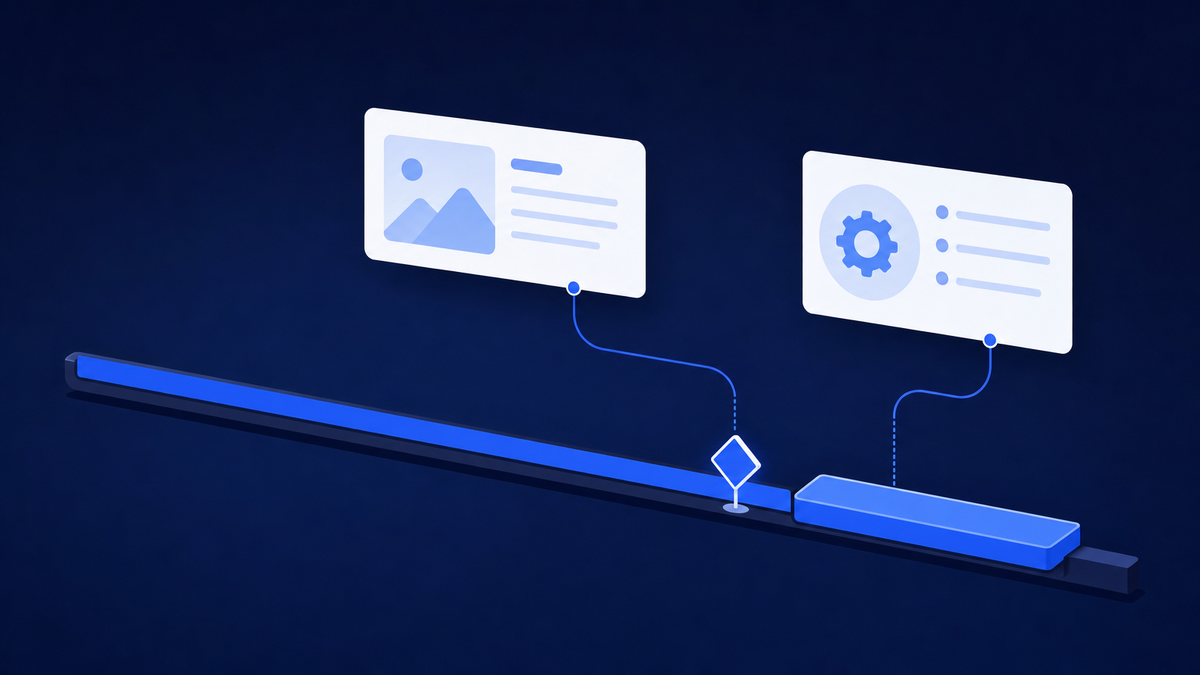
Cards are the small teasers that link to another video, playlist or channel from inside the player. You can add up to five to one video, and YouTube notes that “this feature is available to viewers on computers.” They are not available on videos set as made for kids. End screens are the clickable panel in the final stretch of the video, and they carry more weight because they catch a viewer who already finished.
The end screen rules are strict:
- The video has to be at least 25 seconds long
- Elements can only sit in the last 5 to 20 seconds
- A standard 16:9 video takes up to four elements
- Element types: a specific video, a best-for-viewer pick, your most recent upload, a playlist, a subscribe button, another channel, or an external link if you are in the Partner Program
- Made-for-kids videos get none of it, and end screens do not render on mobile web browsers
The practical version, in the order you would do it:
- Design the ending first. Plan your last twenty seconds around the end screen while you are still editing, so the elements land on empty background instead of over your face.
- Find the dip. Open the audience retention graph in Analytics and find the biggest drop. YouTube defines dips as moments “that were either skipped or moments where viewers stopped watching your video completely.”
- Place a card ten seconds before it. That is precisely where an alternative video is worth offering. Key moments need a video of at least 60 seconds with at least 100 views before they show up.
End screens catch the viewer who already finished. Cards catch the one about to leave.
Should you upload private and wait before publishing?
Upload private, yes. Wait, no. The advice to sit on a finished video for 24 hours so the algorithm does not start early is folklore, and YouTube contradicts it directly: “publish time is not known to impact a video’s long-term performance.” The same page dismisses upload frequency as a lever too, saying “growth in views across uploads is not correlated with time between uploads.”
What the private state is for is finishing the job:
- Upload privately. Nobody can watch until you say so.
- Complete every field on this list.
- Let the Checks run. The copyright and ad suitability scan runs in the background, and YouTube recommends waiting for it to complete before going public, so you can strip claimed audio or dispute a claim first.
- Schedule. Pick the time your audience is around.
If you publish weekly, set your repeat answers once in Settings, then Upload defaults. Only browser uploads inherit them.
Premieres are the exception. A Premiere is the one case where timing is a real decision. It creates a public watch page before the video exists, and viewers who set a reminder get a notification about 30 minutes before and another at the start.
There is live chat plus chat replay afterwards. Shorts, 360 or VR180 video, and anything above 1080p cannot be premiered.
What is different when you upload a Short?
Shorts run up to 3 minutes, take a 100 character title, and still require the made-for-kids answer. Since July 2026, Partner Program creators can upload custom thumbnails for Shorts and pick from three suggested frames on desktop, which closes a gap that existed since Shorts launched. Recommended thumbnail resolution is 2160 x 3840 at 9:16.
A Short still at 0 views a day after upload has a classification or restriction problem, not a retention problem. Why Shorts get stuck at 0 views walks through the Studio check.
| Setting | Long-form video | Short |
|---|---|---|
| Title | 100 characters | 100 characters |
| Custom thumbnail | Phone-verified account | Partner Program creators, since July 2026 |
| Thumbnail resolution | 3840 x 2160, 16:9 | 2160 x 3840, 9:16 |
| A/B testing | Yes | No |
| Premiere | Yes | No |
| Made-for-kids answer | Required | Required |
| Collaborators | Up to five | Up to five |
What Shorts do not get is the testing tool, since A/B testing excludes them, and they cannot be premiered.
They can carry collaborators, though: you can invite up to five creators to a video or a Short. Once they accept, their name and subscribe button appear and the video is recommended to their audiences too.
What should you do once the video is live?
Set the original video language correctly, because automatic dubbing is now open to all channels and a wrong language setting produces mistranslated dubs. You can review dubs before they go out by choosing Publish manually in channel settings. If you used the Inspiration tab for title ideas, note that YouTube began deprecating it in August 2026 and points creators to Ask Studio instead.
Watch the right number. YouTube now separates raw views from engaged views, and the gap between them tells you whether your thumbnail promise matched the video, which is exactly what views versus engaged views explains.
Then get it seen. A filled-in upload screen still needs an audience. That is exactly what Sprizzy is for: you pick the video and who should see it, and it runs the campaign on YouTube’s own ad platform, real viewers only, from $50.
Test it with a small budget. Sprizzy campaigns start at $50 and your first one comes with a money-back guarantee.
Three reads that pick up where this checklist stops:
- What to do after uploading a YouTube video, the first day or two of promotion work
- The best free tools to grow a YouTube channel, what Studio does for free versus vidIQ, TubeBuddy and Morningfame
- How to script a video that keeps people watching
Common questions
Do YouTube tags still matter in 2026?
Barely. YouTube's performance FAQ rates tags "not important" and says they are "primarily used to help correct for common spelling mistakes", while the tags help page says they play a minimal role in discovery. Add a few likely misspellings of your name, niche or a product you review, then move on. Never paste tags into the description, which YouTube treats as spam.
Should you upload a YouTube video as private and wait before publishing?
Upload private, but do not wait. YouTube states that publish time is not known to impact a video's long-term performance, so sitting on a finished video for 24 hours achieves nothing. The private state is useful for a different reason: it lets you complete every field and let the copyright and ad suitability checks finish before anyone can watch.
Why are my YouTube chapters not showing up?
Almost always a formatting problem. YouTube requires the first timestamp to be 00:00, at least three timestamps listed in ascending order, and a minimum chapter length of 10 seconds. Miss any one of those and chapters silently fail without an error message. Check that no chapter is shorter than 10 seconds, which is the rule creators break most often.
Can you change a YouTube title or thumbnail after publishing?
Yes, you can edit both at any time in YouTube Studio, and there is now a structured way to do it. YouTube's A/B testing tool runs up to three titles, thumbnails or combinations of the two on the same video and shows the winner to everyone. It needs advanced feature access and desktop YouTube Studio, and finishes within two weeks.
Do you have to say whether your video is made for kids?
Yes. YouTube requires every creator to set existing and future videos as made for kids or not, a consequence of its FTC settlement over children's privacy. Answer it honestly, because a made-for-kids video loses comments, cards, end screens, the notification bell, personalized advertising, save to playlist, save to watch later, live chat, memberships and Super Chat.
When do you have to disclose AI-generated content on YouTube?
When AI has meaningfully altered or generated realistic content: making a real person appear to say or do something they did not, altering footage of a real event or place, or generating a realistic scene that never happened. Beauty filters, colour correction, caption generation, upscaling and clearly fantastical animation are exempt. Repeatedly failing to disclose risks content removal or Partner Program suspension.
How many cards and end screen elements can one video have?
Up to five cards and up to four end screen elements on a standard 16:9 video, with other aspect ratios sometimes allowing fewer. The video must be at least 25 seconds long to carry an end screen at all, and elements can only sit in the last 5 to 20 seconds. Made-for-kids videos get neither cards nor end screens.
What size should a YouTube thumbnail be?
YouTube recommends 3840 x 2160 pixels for regular videos and 2160 x 3840 for Shorts, with a minimum width of 640 pixels for videos. Use JPG or PNG, keep it under 2 MB when uploading on mobile or 50 MB on desktop, and stick to 16:9 for long-form. Your account has to be phone-verified before custom thumbnails unlock.