

A subscriber package and a YouTube ad both add to your subscriber count, and YouTube treats them in opposite ways. Here is what its Terms, Help Center and latest enforcement report say about each, and where to see the difference in Studio.
What counts as a bought subscriber on YouTube?
Any subscriber that you, or someone you hired, paid for. YouTube’s Help Center defines spam subscribers as “subscribers gained through artificial means, such as purchasing subscribers through a third-party service” (YouTube Help). Its Terms go further and ban “paying people or providing them with incentives” to “increase a channel’s subscribers” (YouTube Terms of Service). Bots and paid humans are covered alike.
Three things get sold as subscribers. YouTube’s own rules name each one:
| What is sold | What YouTube’s rules say |
|---|---|
| Accounts run by software, delivered in a batch | Spam subscribers “won’t count toward your total number of subscribers” (Help Center) |
| “Real” people paid or credited to subscribe | The Terms ban “paying people or providing them with incentives” to increase subscribers |
| Sub-for-sub swaps between creators | The fake engagement policy bans “offering to subscribe to another creator’s channel only if they subscribe to your channel (‘sub4sub’)” |
The payment is what breaks the rule. A subscriber from a real account is still a bought subscriber if someone was paid or rewarded to click Subscribe.
Asking is allowed. The same policy says “You’re allowed to encourage viewers to subscribe, hit the like button, share, or leave a comment.” A spoken ask or an end-screen Subscribe element is fair; a trade is not.
Why does your subscriber count drop after you buy subscribers?
Because YouTube checks every new subscriber after it lands. The count on your channel page updates in real time, but the count in YouTube Analytics runs “approximately 48 hours behind” so YouTube can “perform extra verification and spam reviews so the numbers are accurate” (YouTube Help). Bought accounts that fail those reviews stop counting, and the number falls back.
- Delivery. The seller’s accounts subscribe and the public count on your channel page climbs at once, because that count is live.
- Review. Analytics holds new subscribers for about two days. YouTube says it regularly verifies “the legitimacy of the accounts and actions on your YouTube channel.”
- Removal from your total. Accounts identified as spam “won’t count toward your total number of subscribers” and “won’t show in your subscriber list.”
- Termination. When YouTube closes the accounts a seller used, any still counted come off then: “Terminated accounts and subscribers that are identified as spam will not count toward your total number of subscribers or views.”
The bought account never notices. YouTube does not unsubscribe a spam account: “To that account, it still shows that they’re subscribed and they continue to get your videos in their Subscriptions feed” (YouTube Help). It just stops counting on your side.
The removals are large. From April to June 2026, YouTube removed 2,732,395 channels, and 2,310,181 of them, 84.5%, for spam, deceptive practices and scams (Google Transparency Report). Each removed account that had subscribed somewhere came off that channel’s count.
Never bought any? A drop on a channel that bought nothing has ordinary causes. Here is why a YouTube subscriber count drops and how to read it.
Can YouTube punish your channel for buying subscribers?
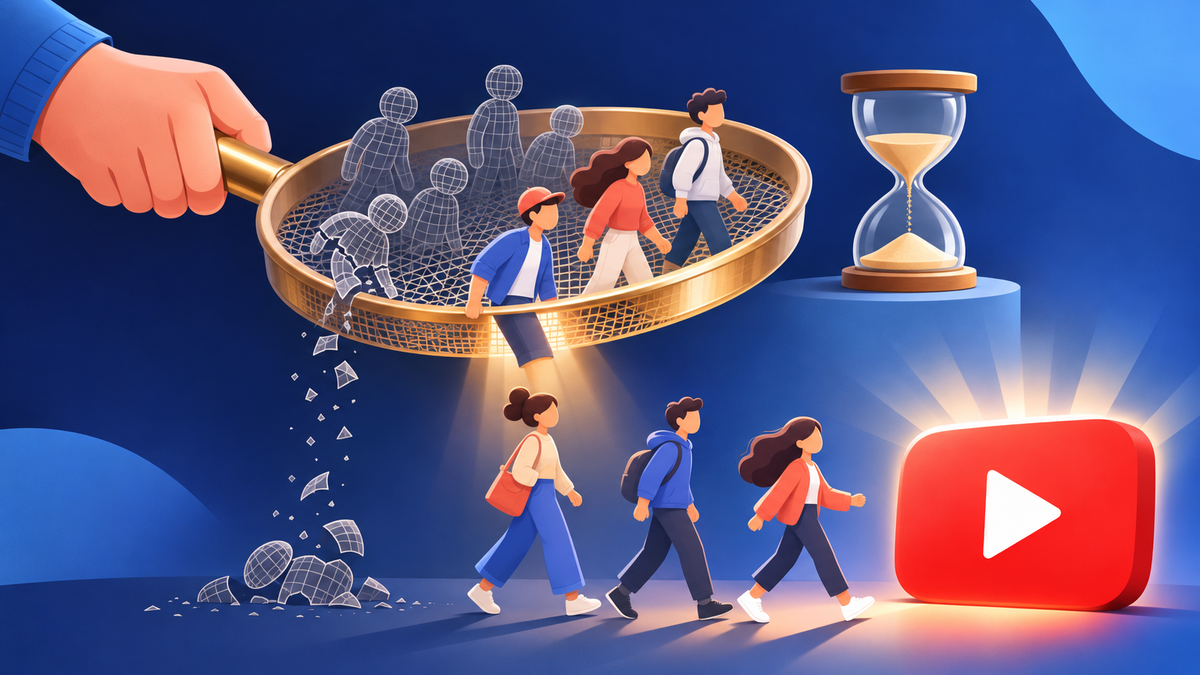
Yes, and the penalty lands on your channel even when a seller did the work. YouTube’s fake engagement policy says: “If you hire someone to promote your channel, their decisions may impact your channel. Any method that violates our policies may result in content removal or a channel takedown, whether it’s an action taken by you or someone you’ve hired” (YouTube Help).
Penalties escalate. A first violation usually brings a warning. After that come strikes, and “if you get 3 strikes within 90 days, your channel may be terminated.” The policy also names things that are violations on their own:
- Content that “links to or promotes third-party services that artificially inflate metrics like views, likes, and subscribers”, in a video, a description or a comment.
- A video that links to a seller “in a promotional or supportive context”, such as “I got 1 million subscribers on this video in a day and you can too!”
- A sub4sub offer, even when no money changes hands.
It can break US law too. The FTC’s 2024 rule bans selling or buying “fake indicators of social media influence, such as followers or views generated by a bot or hijacked account” (FTC).
The ban reaches a buyer who knew or should have known they were fake and used them to look more influential for a commercial purpose. Here is what that rule covers for creators.
The channel that pays is the channel that answers for it, whoever placed the order.
What makes a subscriber from an ad different from a bought one?
Who decided to subscribe. YouTube calls engagement legitimate “when a human user’s primary intent is to authentically interact with the content,” and illegitimate when it comes from “coercion or deception” or when “the sole purpose of the engagement is financial gain” (YouTube Help). An ad pays YouTube to show your video. Nobody is paid to subscribe; the viewer chooses.
YouTube says it outright. Its help page for its own ad tool says the views and subscribers gained through ads “are legitimate” (YouTube Help).
| Question | Bought subscriber | Subscriber from an ad |
|---|---|---|
| Who gets paid | A seller, or the person who clicks | YouTube, for showing your video |
| Who decides to subscribe | Whoever placed the order | The viewer, after watching |
| YouTube’s word for it | “Spam subscribers” | “Legitimate” |
| Row in Subscription source | Subtracted under “Closed accounts” | “YouTube advertising” |
| Your next upload | Reaches accounts YouTube says “aren’t active viewers” | Reaches a person who chose your channel |
That right-hand column is what Sprizzy is built to deliver: real viewers on YouTube’s official ad platform, no bots, ever.
How do you get subscribers from ads that YouTube counts?
Put the video in front of people who already watch your kind of content, and let them choose. Sprizzy does this through Google Ads, YouTube’s official ad platform. You pick the video and the goal, more subscribers; Sprizzy builds the ads, targets real viewers by keywords, similar channels, location, age and gender, and runs the promotion for you, from $50.
- Choose the video. Pick the upload a new viewer would most want more of. One good video is what turns a stranger into a subscriber. To grow the whole channel, promote several videos or every new upload: see YouTube channel promotion.
- Pick “More subscribers”. The ad carries a Subscribe button, so a viewer can subscribe from the ad itself. For ads built to win subscriptions, Google says “the call-to-action (CTA) button is replaced with a subscribe button” (Google Ads Help).
- Define the audience. Enter keywords and channels like yours, then set the location, age and gender of the people you want.
- Let it optimize. Sprizzy tests more than 200 combinations of keywords, channels and demographics, then moves your budget to the ones that earn subscribers at the lowest cost. Low performers are removed every hour.
The subscribe costs nothing extra. You pay when a real viewer watches the ad. A subscribe within 7 days of that view is an earned subscriber, and Google states “You aren’t charged for earned actions” (Google Ads Help).
The ad goes to people who can subscribe. Google serves these ads to signed-in viewers only, because “signed-in YouTube viewers are the ones most likely to subscribe or watch more videos on the channel.”
Start small. Sprizzy promotions start at $50, with no monthly fees, and your first one comes with a money-back guarantee. For budgets, see what a subscriber from YouTube ads costs.
How do you check that your new subscribers are real?
Check where they subscribed. YouTube Studio’s Subscription source report has a “YouTube advertising” row for “Subscriptions from ads” and a “Closed accounts” row for the “reduction in subscriber count caused by removal of closed accounts and spam” (YouTube Help). Subscribers from ads land in the first row. Bought ones, once caught, are subtracted in the second.
- Open Analytics. Sign in to YouTube Studio and select Analytics from the left menu.
- Open the full report. Click “See more” on any card.
- Switch the dimension. Select Subscription source at the top, then set the dates to cover your promotion.
- Read two rows. “YouTube advertising” is what your ads earned. “Closed accounts” is what YouTube took back as closed or spam.
In Sprizzy, link your channel. The Campaign Subscribers column in your Sprizzy report fills in once your channel is linked to Google Ads. Leave “Disable interest-based ads” unticked in YouTube Studio; with it ticked, Google cannot report those subscribers.
A subscriber worth having shows up under YouTube advertising and gets your next upload in a feed a real person reads.
Common questions
Is it illegal to buy YouTube subscribers?
Buying fake subscribers can break US law as well as YouTube's rules. The FTC's 2024 rule bans selling or buying fake indicators of social media influence, such as followers generated by a bot, when the buyer knew or should have known they were fake and used them for a commercial purpose. Here is what the rule covers. Subscribers from ads are real people, so it does not apply.
Does buying YouTube subscribers work?
Only until YouTube checks. The public count rises when the seller delivers, then YouTube's spam reviews, which keep the Analytics count about 48 hours behind, take spam subscribers out of your total, and accounts YouTube terminates come out later. YouTube says these are not active viewers, so your next upload gains nothing from them. Subscribers from an ad chose your channel, and YouTube keeps them.
How much does it cost to buy YouTube subscribers?
No price buys a subscriber YouTube keeps, because bought subscribers are removed as spam whatever they cost. What you can put a budget on is an ad: you pay when a real viewer watches, and a subscribe that follows costs nothing extra. Here is what a subscriber from YouTube ads costs, and Sprizzy promotions start at $50 with no monthly fees.
Will YouTube ban my channel if I bought subscribers once?
A first violation of the fake engagement policy usually brings a warning, and the bought subscribers come off your total. Repeat violations bring strikes, and three strikes within 90 days can terminate the channel. Stop buying, delete any link to the seller from descriptions and comments, and never post a video about the purchase, because each of those is a violation by itself.
Are paid subscribers allowed if a real person clicks Subscribe?
No. YouTube's Terms of Service ban paying people or giving them incentives to increase a channel's subscribers, so a real person paid or credited to subscribe still breaks the rules. Sub-for-sub swaps between creators are banned by name in the fake engagement policy. A subscriber is legitimate when the viewer chose to subscribe because of the content, which is exactly what an ad leads to.
Do subscribers from YouTube ads count and stay?
Yes. YouTube's help page for its own ad tool says views and subscribers gained through ads are legitimate, and Studio lists them under the YouTube advertising subscription source. They are real people who chose to subscribe, so they stay like any other subscriber and get your new uploads in their Subscriptions feed. Link your channel to Google Ads to see them in your Sprizzy report.