There is no rate card for promoting a YouTube video. You set a total, an auction prices every view inside it, and the video you pick decides how far the money goes.
This guide uses Google’s own budget rules and the numbers from public creator tests to show what a view and a subscriber cost in 2026, and what to spend on a first campaign.
What are you paying for when you promote a YouTube video?
You are paying for views, one at a time, out of a total you set in advance. Sprizzy runs your video as an ad on YouTube through Google Ads, YouTube’s official ad platform, and a view is billed only when a real person chooses to watch. Nobody pays for a skipped ad or a thumbnail that was scrolled past.
The price floats. Google’s cost-per-view definition describes the bid as “the average amount that you’re willing to pay for each view” and adds: “Some views may cost more or less than your target.” Every view is its own small auction.
The exact second each ad format counts as a paid view is covered in our guide to whether paying to promote a video is worth it. For cost, two numbers matter: the total you set, and the price the auction finds.
You set the total. The auction sets the price of each view. You only pay for people who watched.
What does a promoted view cost in 2026?
Between about two and ten cents for most campaigns. Benchmarks published in 2026 put a skippable in-stream view at $0.05 to $0.10 for the average advertiser, and an aggregated first-quarter 2026 dataset puts the cross-industry average at $0.024. Where you land depends on whose attention you are bidding for.
| Audience advertisers compete for | Benchmark cost per skippable view, Q1 2026 |
|---|---|
| Legal services | $0.058 |
| Finance and banking | $0.044 |
| B2B and software | $0.041 |
| Education | $0.027 |
| Gaming | $0.026 |
| Travel | $0.022 |
| Retail and consumer goods | $0.018 to $0.019 |
Why creators sit at the cheap end: a finance explainer competes with banks buying leads. A cooking, gaming or music video mostly competes with other creators, and those audiences cost about a third as much per view.
The pattern matters more than the decimals: audiences that brands fight over cost roughly three times more per view.
What did creators pay in public tests?
About 4 cents per view, and anywhere from about 44 cents to about $3.40 per subscriber. Figures converted from pounds at the September 2026 rate. In a run of five small promotions in the UK in late November 2025, Black Friday weekend included, the price of a view barely moved between videos. The price of a subscriber moved almost eightfold, on the same budget, in the same week.
| Budget and run | Goal | What it bought | Price paid |
|---|---|---|---|
| About $13 over 3 days | Subscribers | 4,721 impressions, 30 subscribers | About $0.44 per subscriber |
| About $13 over 3 days (about $6.85 billed) | Subscribers | 1,157 impressions, 2 subscribers | About $3.40 per subscriber |
| About $13 over 3 days | Views | 3,856 impressions, 297 views | About $0.046 per view |
| About $40 over 3 days, Black Friday weekend | Views | 7,479 impressions, 826 views | About $0.048 per view |
| About $27 over 14 days | Views | 16,685 impressions, 733 views | About $0.036 per view |
Read the two halves differently. Views cost about 3.6 to 4.8 cents whatever the video was. Subscribers cost about 44 cents on one video and about $3.40 on another, because one video made people want more and the other did not.
A second public test, in October 2024, put $200 behind one video aimed at men over 40 in the US, UK and Canada. A narrow audience in three expensive countries, and a subscriber still cost about $0.90.
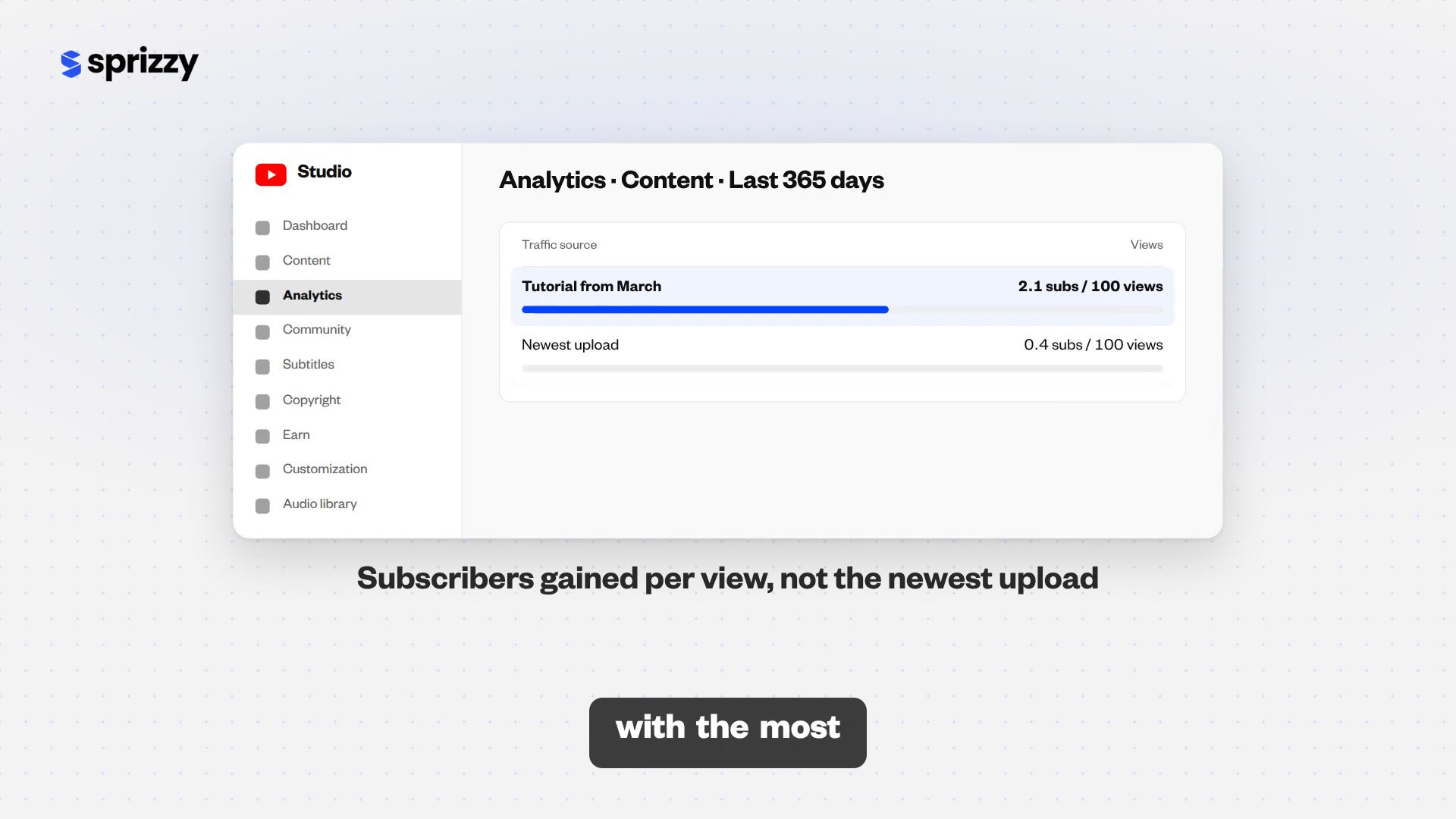
Before you spend, open YouTube Studio and find the video with the most subscribers gained per view. The auction charges for the view. The video does the converting, so the right video makes every subscriber cheaper.

Why does the same budget buy different results?
Four things move the price: the country, the audience, the season and the video. Three of them are targeting decisions, which is why Sprizzy tests more than 200 audience combinations of keywords, similar channels and demographics on every campaign and removes the low performers every hour. Your budget keeps moving toward the viewers who watch.
- Country. A viewer in the United States, the UK, Canada or Australia costs more than a viewer in most other countries, because more advertisers bid for them. Target the countries your channel is for, and no others.
- Audience. The table above is the whole story: the more money brands make from a viewer, the more they bid for that viewer.
- Season. December is the most expensive month for YouTube ads. One tracker built on tens of millions of ad impressions recorded the average YouTube CPM rising from $4.73 in November 2024 to $5.70 in December, about 20% in a month.
- The video. The average view rate on a skippable ad is 31.9% in 2026 benchmarks, so roughly one person in three who is shown the ad watches it. A stronger first five seconds turns the same impressions into more views.
Seasonal video? Promote it anyway. The $40 test above ran on Black Friday weekend, one of the priciest of the year, and still paid about 4.8 cents per view.
Target narrowly, give the video a strong first five seconds, and promote the one that already converts.
How does Google spend your budget day to day?
It paces the total across the days of the campaign and never bills past it. Google’s campaign total budget rules state: “There are no daily spending limits, and you will never be charged more than your total budget.” The system looks at what has been spent so far and adjusts each day to finish the total by the end date.
| Budget type | How it spends | Hard ceiling |
|---|---|---|
| Campaign total budget | Adjusts daily to spend the total over the remaining days. Minimum run: 3 days. | Never more than the total you set |
| Average daily budget | A busy day can spend up to twice the daily average. | 30.4 times the daily average per month |
Busy days spend more, quiet days less. About $13 over three days is not $4.45 a day. One UK test above budgeted about $13 and was billed about $6.85: the campaign did not find enough views at its price in three days, and unspent budget is never charged.
Google warns that “sudden changes like changing the end date or increasing budget can lead to uneven spend and shifts in performance.” Set the budget, set the dates, and let the campaign finish before you judge it.
What that looks like with Sprizzy: payments are one-time, most promotions run three to five days, you can pause or cancel at any time, and unused funds can be refunded or moved to a new campaign.
How much should you spend on your first promotion?
Start at $50 on one video, then size up once that video has shown what a view turns into. Sprizzy campaigns start at $50 with no subscription and no recurring fees, and the budget selector on the pricing page shows estimated views and estimated new subscribers at every step from $50 to $1,000 before you pay.
- Pick the proven video. Choose the one with the best subscribers gained per view in YouTube Studio, not the newest upload.
- Start with $50 to $100. Your first Sprizzy campaign comes with a money-back guarantee of up to $100, so the first test carries very little risk.
- Let it run three to five days. That is long enough for the pacing to even out. Leave the budget and dates alone while it runs.
- Read cost per subscriber. In YouTube Studio, open the “YouTube advertising” traffic source and check subscribers gained and what those viewers watched next.
- Scale the winner. Put the larger budget behind the video that produced the cheapest subscribers. A launch or a video that sells something earns more per view, so it justifies more.
Growing from zero? A first campaign pairs well with the groundwork in our guide to your first 100 subscribers.
Spend small to find the video. Spend big on the video you found.
What does a $10 offer for 10,000 views really cost?
It can cost you the channel. Real views are priced one at a time in an auction, so nobody can sell a fixed count of them for pennies. Offers that do are selling automated or tricked traffic, and YouTube’s fake engagement policy bans “anything that artificially increases the number of views, likes, comments, or other metrics.”
The same page is blunt about who carries the risk: “If you hire someone to promote your channel, their decisions may impact your channel.” A violation can mean content removal or a channel takedown, “whether it’s an action taken by you or someone you’ve hired.”
The safe test is one question: where do the views come from? Sprizzy promotes your video as ads on YouTube’s official ad platform, real viewers only, no bots, and every view shows in your YouTube Studio analytics. Real ad views help a channel grow.
A guaranteed number of views for a fixed price is the tell. Real ad views are bought at auction, so a legitimate promotion shows you an estimate before you pay and a report afterwards.
Common questions
What is the minimum budget to promote a YouTube video?
With Sprizzy the minimum is $50, paid once, with no subscription or recurring fee. That budget runs as real ads on YouTube's official ad platform and is billed per view, so you pay only when a real viewer watches. You can pause or cancel at any time, and unused funds can be refunded or moved to a new campaign.
Do you pay when someone skips your ad?
No. Google bills a skippable in-stream view only when a viewer watches 30 seconds, or the whole ad if it is shorter, or interacts with it. An in-feed view is billed when someone clicks the thumbnail or watches 10 seconds of autoplay. A skip at second five costs nothing, which is why a paid view means a person chose to watch.
What is a good cost per view for a YouTube promotion?
2026 benchmarks put a skippable in-stream view between about $0.02 and $0.10, with legal, finance and software audiences at the top and retail, gaming and consumer audiences at the bottom. Public UK tests in November 2025 paid about 3.6 to 4.8 cents per view, converted from pounds. Judge a campaign on cost per subscriber or per sale, because view prices barely differ between videos.
When is the cheapest time of year to promote a YouTube video?
Any month outside the holiday rush. December is the most expensive month for YouTube ads: one tracker built on tens of millions of impressions recorded the average CPM rising from $4.73 in November 2024 to $5.70 in December. If the video is seasonal, promote it anyway. A Black Friday weekend test in the UK still paid about 4.8 cents per view.
Is there a monthly fee for YouTube promotion?
Not with Sprizzy. Campaigns are one-time payments from $50 with no subscriptions, recurring fees or hidden fees. Every budget includes pay-per-view YouTube ads, more than 200 audiences tested, ad copy written by Sprizzy and a money-back guarantee on your first campaign. You can pay by credit card, PayPal, Apple Pay, Google Pay or Venmo.
Can Google charge more than the budget you set?
No. Google's campaign total budget rules state that you will never be charged more than your total budget. Spend is paced across the campaign's days, heavier on busy days and lighter on quiet ones, and a campaign needs at least three days. On an average daily budget a single day can reach twice the daily amount, capped at 30.4 times per month.