Paying to promote a YouTube video used to mean learning Google Ads yourself or trusting a gig-site stranger who sells “views”, until Sprizzy made the first easy. In 2026 the line is clear.
Google Ads defines to the second what a paid view is, and YouTube’s help pages state that promoted views and subscribers are legitimate. This article covers what $50 buys, when it is worth it, what decides the result, and how to run a first test.
What does paying to promote a YouTube video actually mean?
It means Sprizzy runs your video as an ad on YouTube through Google Ads, and you pay only when a real person chooses to watch it. That is the only kind of paid promotion YouTube supports.
YouTube’s help page on promoted videos settles the legitimacy question in one line: “all views and subscribers you gain through a Promote campaign are legitimate.” Anything that adds views without a viewer is a different product, and YouTube bans it.
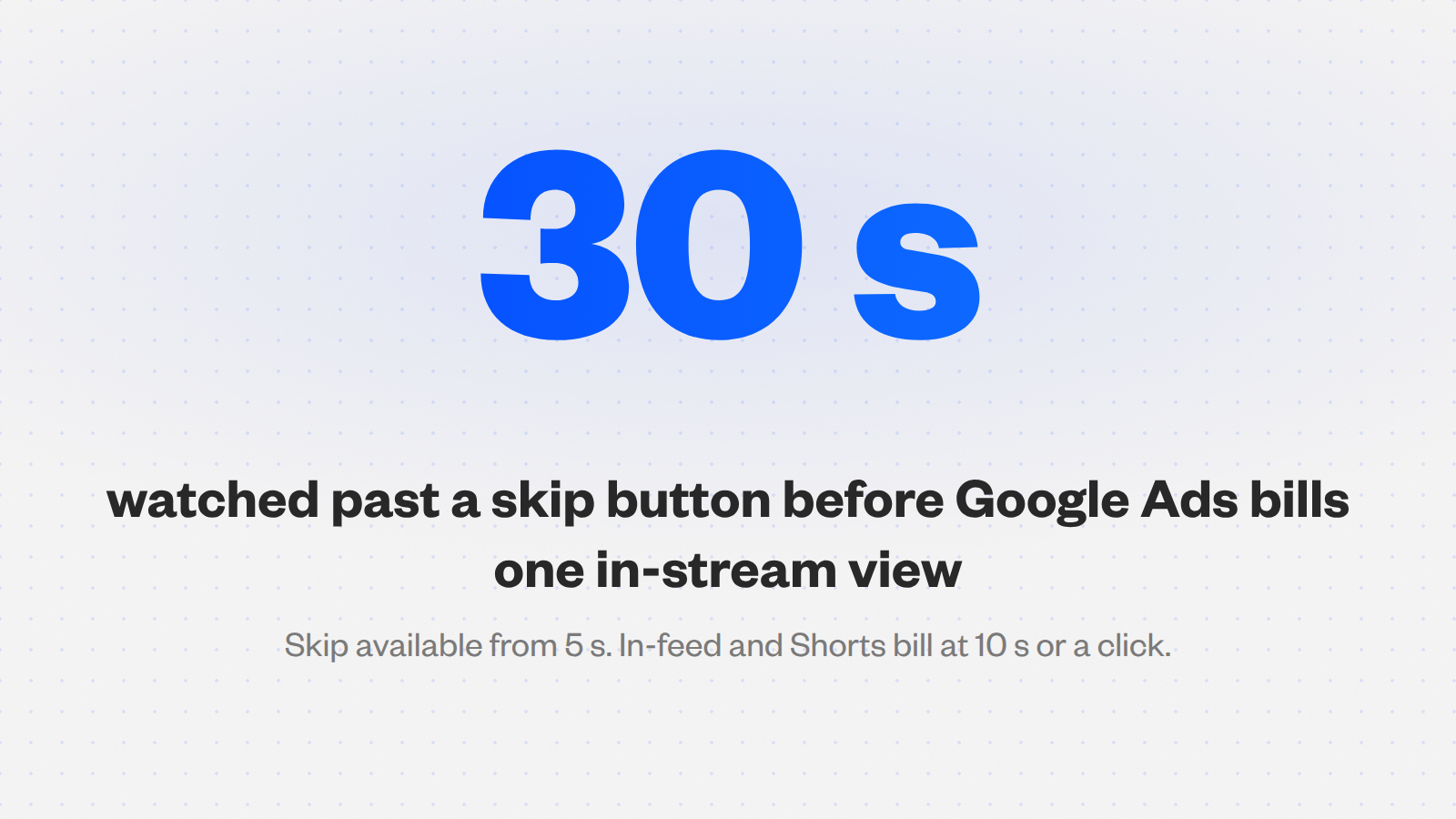
Three formats, three billing rules. Your promoted video can appear in three places, and Google Ads charges for each differently. The definitions below are verbatim from the Google Ads cost-per-view definition, as of September 2026.
| Ad format | Where it shows | When you pay for a view |
|---|---|---|
| In-feed | Search results, the home feed, next to related videos | When a person clicks the thumbnail to watch, or watches the autoplay for at least 10 seconds |
| Skippable in-stream | Before or during another video, skippable after 5 seconds | When a viewer watches 30 seconds (or the whole ad if shorter) or interacts with it |
| Shorts | In the Shorts feed | When someone watches 10 seconds (or the whole ad if shorter) or taps the call to action |
Why this matters: an in-stream viewer had a skip button for 25 seconds and did not press it. An in-feed viewer saw your thumbnail next to organic results and picked yours. That is a person who chose to watch, the raw material of organic growth.
Google’s best-practice guide for Video view campaigns adds that running all three formats together “can help drive additional TrueView views, consideration lift, and increased Search lift,” which is why creator promotions run across formats rather than picking one.
A paid view is a person who chose to watch. That is the only kind YouTube supports.
What does $50 actually buy?
A few hundred to a couple of thousand chosen views, depending on niche, country and the video. Benchmarks put a skippable in-stream view near $0.05 and a Shorts view at $0.10 to $0.30 (Store Growers, February 2026); a broader estimate covering crowded commercial niches runs $0.10 to $0.30 per view (WebFX, April 2026). Creator promotions targeted at keywords and channels in quieter niches run well below that advertiser average.
Two other numbers set expectations. Store Growers’ 2026 benchmark puts the average view rate, the share of people shown a skippable ad who watch it, at 31.9%, and the cost per thousand impressions at $5 to $10 for most advertisers.
So $50 is also several thousand impressions of your thumbnail and title in front of people who match your targeting, and roughly a third of them stop to watch. Where you land in that range is mostly under your control:
- Country. A view in the United States costs more than a view in most other countries, because more advertisers are bidding for that viewer.
- Niche. A finance or software video competes with brands paying for leads. A cooking, gaming or hobby video mostly competes with other creators.
- The video itself. A hook that holds people past the skip point earns a higher view rate, and Google’s auction rewards ads people watch with a lower price per view.
- Targeting. Narrow keyword, channel and location targeting reaches people who are already interested, and interested people cost less per view than everyone.
- Season and pacing. December is the priciest month for YouTube ads, and Google spreads a budget unevenly across the days of a campaign. Our guide to what it costs to promote a YouTube video has the numbers.
Where Sprizzy fits: the targeting that keeps the price down, keywords, similar channels, location, age and gender, is exactly what Sprizzy sets up for you. It runs your video through YouTube’s official ad platform, real viewers only, no bots, from $50.
$50 buys chosen viewers, and narrow targeting is what makes each one cheaper.
When is paying to promote a YouTube video worth it?
It is worth it when the video is good and the audience is small. Promotion solves one problem, that nobody has seen the video yet, and solves it fast. The test is simple: “If you have videos that are working, that are taking non-subscribed viewers and successfully converting them into subscribers… some of those videos might be worth promoting.”
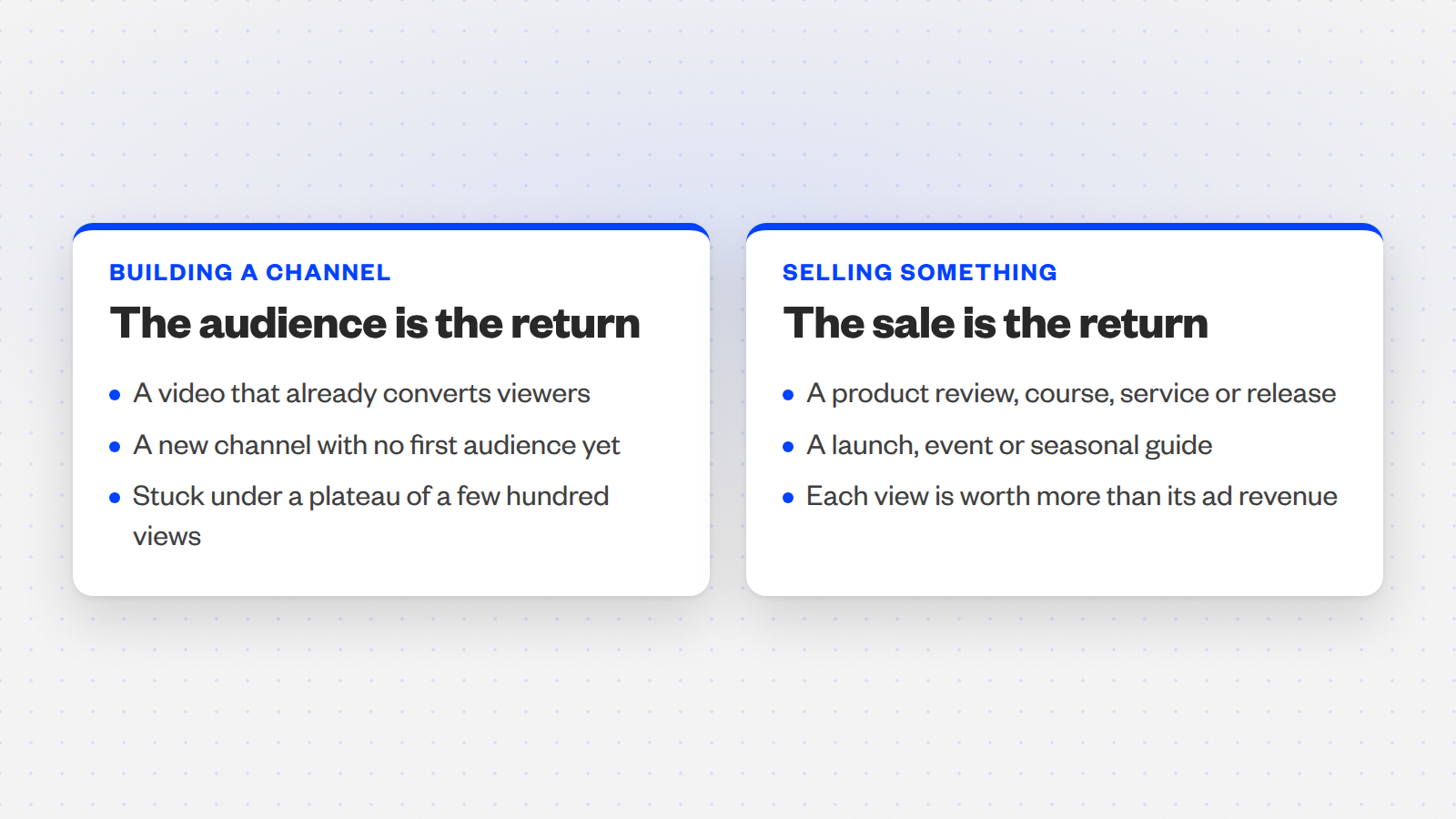
The situations where promotion pays off most clearly:
- You have a video that already converts. Look in YouTube Studio for the video with the best subscribers-per-view and the strongest retention. That video is proven; it only needs reach.
- A new channel needs its first real audience. Search and suggested traffic start slowly on a channel nobody has watched. A promotion gives YouTube’s recommendation system real viewers, real watch time and real reactions to learn from on day one.
- The video is time-sensitive. A launch, an event, a seasonal guide or a trending topic cannot wait months for search to catch up.
- The video sells something. A product review, a course, a service or a music release turns views into revenue, so each view is worth far more than the ad revenue on it. This is where businesses using YouTube see the fastest return.
- You are stuck under a plateau. A channel that posts consistently and still cannot get past a few hundred views per video has a discovery problem, not a content problem. Promotion is the direct fix for discovery.
The return is the audience: new people who now know your channel exists, and the subscribers, watch time and sales that follow from them.
Sort your videos in YouTube Studio by subscribers gained per view. The one at the top is proven. It only needs reach.
What decides whether the money works?
The video decides. Same budget, same targeting, same week, and one video will bring in dozens of subscribers while another brings in a handful. That is the most consistent pattern in paid promotion, and it is good news, because it puts the outcome in your hands before you spend a dollar. Pick the right video and the right ask and the rest of the campaign is mechanics.
What a public test showed
A public example makes the point. UK tech channel Speak to the Geek published a five-video promotion test in February 2026, most runs lasting three days on a small budget.
One video set to an audience-growth goal brought in 30 new subscribers from a £10 budget. Another video with the same budget and goal brought in two. Channel, targeting and budget were identical. The difference was the video.
Promote the video that already earns subscribers organically. You are stacking the odds before you spend.
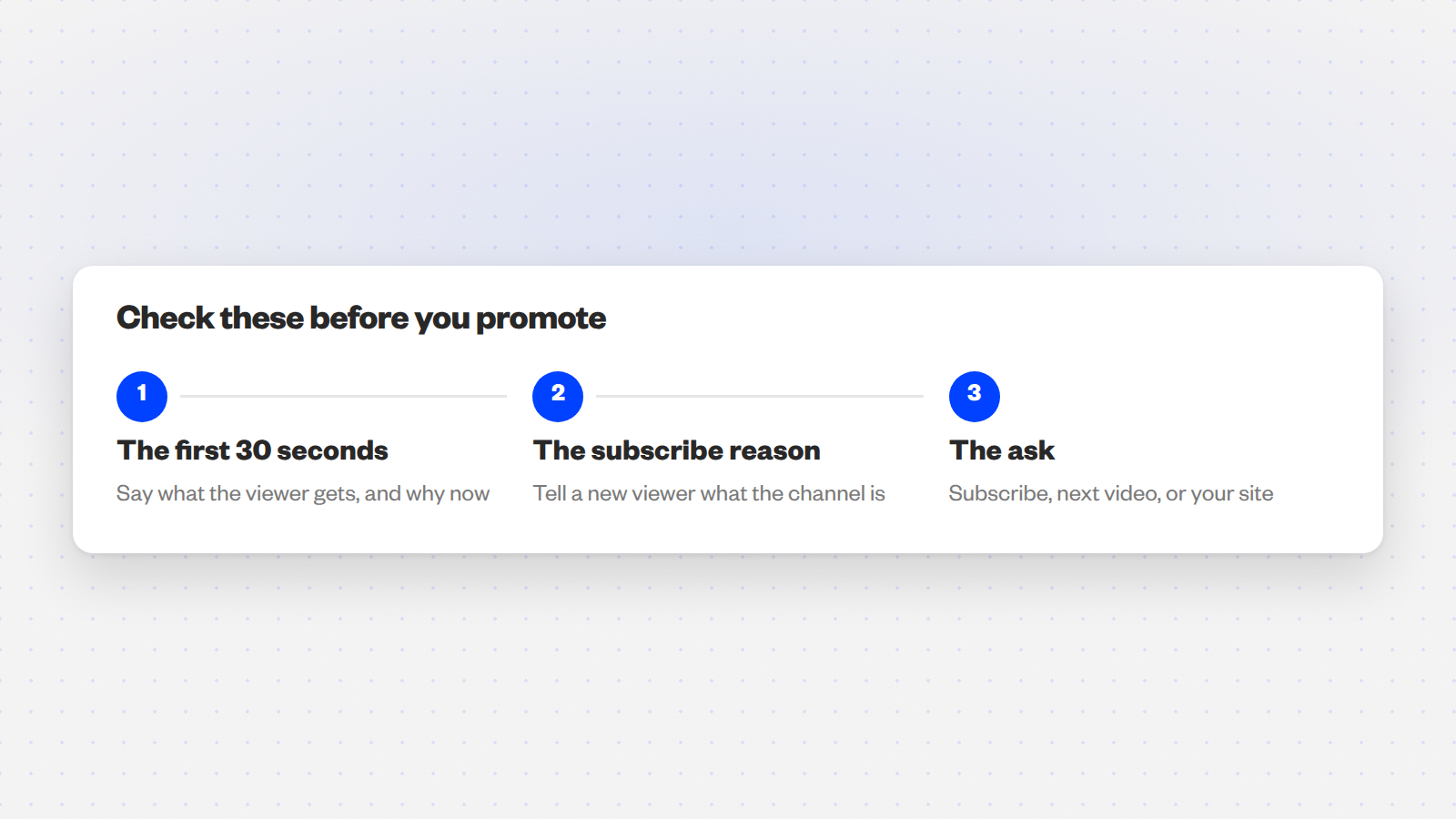
Three things to check before you promote
- The first 30 seconds. An in-stream view is billed at 30 seconds, and an in-feed view starts with the thumbnail. If the opening does not state what the viewer gets and why now, fix it first. Our guide to scripting a video that keeps people watching covers the hook patterns that hold past the skip button.
- The subscribe reason. A promoted viewer is new. Somewhere in the video, tell them what the channel is and why they would want the next one.
- The ask. Decide what you want a new viewer to do: subscribe, watch the next video, or click through to your site. Sprizzy can send viewers to your website or social media, so a video that sells should say where to go.
Do promoted views help the channel afterwards?
Yes, because the promoted viewer is a real person who now knows your channel, and everything they do next is organic. YouTube says so directly: “Follow-on Views are organic views you get when someone watches your videos after seeing your promoted content,” and the same page confirms that follow-on views “count toward YPP eligibility.” Ads find the audience; the video keeps them, and the keeping is what YouTube measures.
The old fear, answered. The worry that promotion damages a channel came from bot views, which tank retention because nobody is watching. Ad views are the opposite: a person who kept watching past the skip point is a retention-positive viewer.
Their session shows up in the same Studio reports as everyone else’s. We unpack the experiment behind that myth, and what YouTube actually says, in Do YouTube Ads Hurt Your Channel’s Organic Growth?
In YouTube Studio, a Sprizzy campaign’s views sit under Traffic source as “YouTube advertising”. Compare that row with search and suggested on view duration, subscribers gained and what those viewers watched next. That is the real report card.
What does Sprizzy do with your budget?
Sprizzy turns your budget into a targeted campaign on YouTube’s official ad platform and runs it for you. You pick the video and describe who should see it, with keywords, similar channels, location, age and gender, and Sprizzy builds the ads and the audiences. Here is how a campaign works, step by step.
- Real viewers only. Every view comes from a real person on YouTube through Google Ads, no bots, and you can verify them in your own Studio analytics.
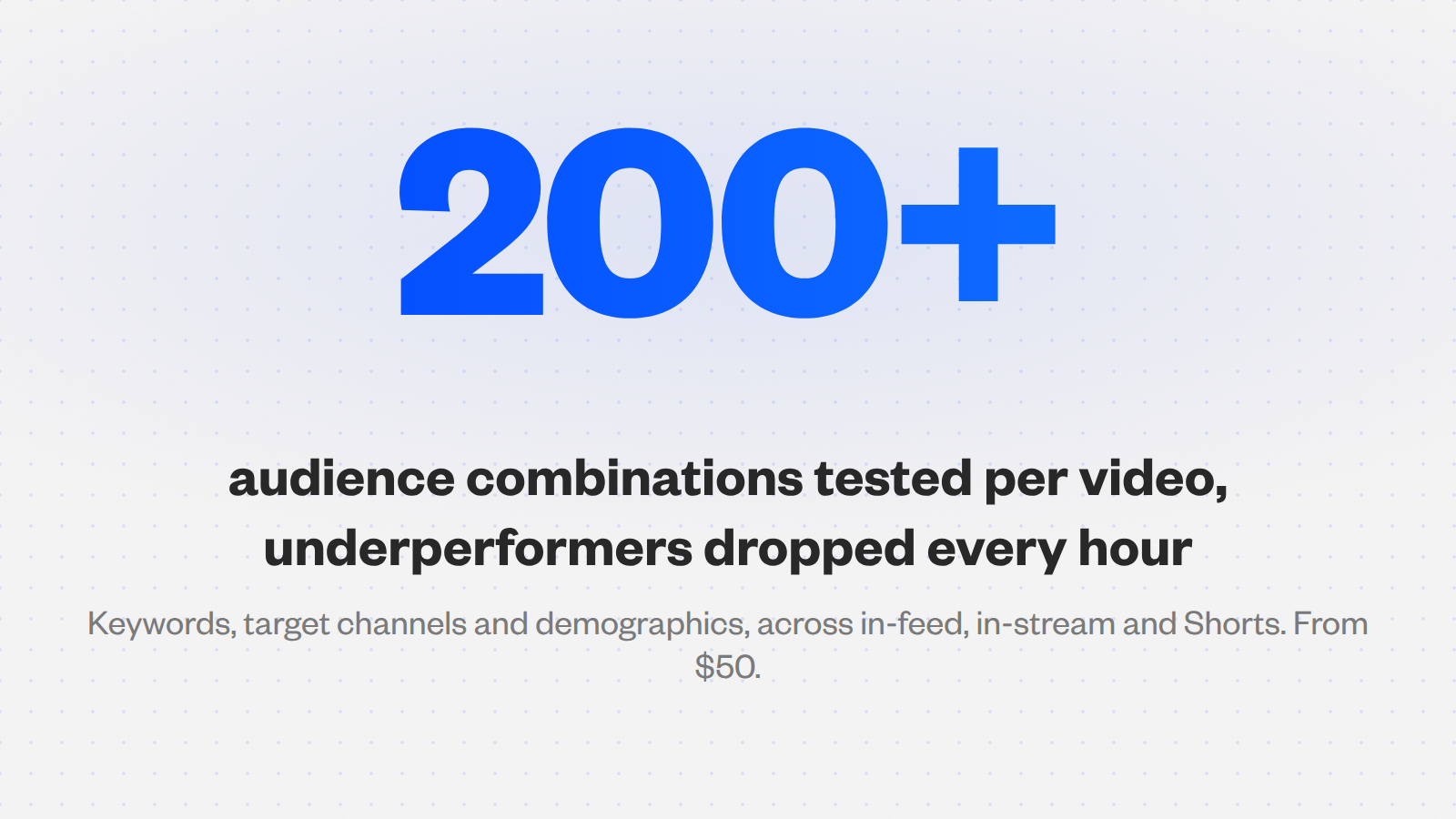
- Targeting that keeps the price down. Sprizzy builds and tests 200+ audience combinations of keywords, target channels and demographics for each video, and drops the underperformers every hour.
- All three formats. In-feed, skippable in-stream and Shorts ads, the combination Google’s own guide recommends.
- From $50, one-time. No subscriptions or recurring fees. Pause or cancel any time, and unused funds can be refunded or moved to a new campaign.
- Money-back guarantee. Your first campaign is covered if the results fall short of the pricing-page estimates.
Setup takes about three minutes, and promotion typically starts within 24 hours. Most promotions run three to five days, which is the test length this article recommends below. Sprizzy campaigns start at $50 and your first one comes with a money-back guarantee.
You choose the video and the audience. Sprizzy does the Google Ads afternoon.
How do you run a $50 test that tells you something?
Pick one proven video, one goal, a tight audience and a three-to-five-day run, then read the Studio report a week later. A test built this way answers the only question that matters: what does a chosen viewer of this video cost, and does that viewer stay. Spread the same $50 across four videos and three goals and you learn nothing from any of them.
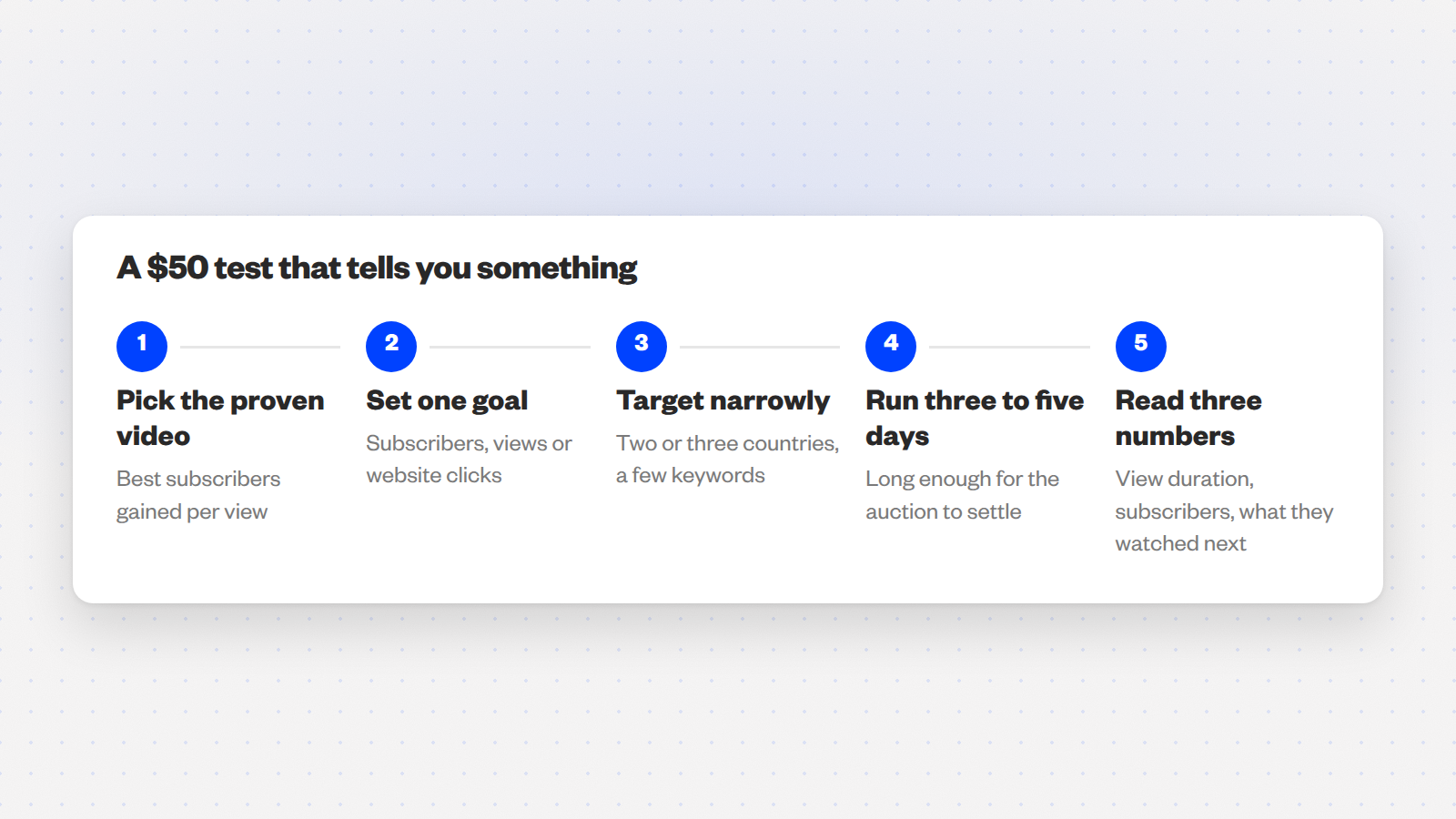
- Choose the video with the best organic conversion. In Studio, sort your videos by subscribers gained per view. Promote the winner, not the newest upload.
- Set one goal. Subscribers if you are building a channel, views if you are launching something, website clicks if the video sells.
- Target narrowly. Two or three countries at most, a handful of keywords that describe the video, and a few channels whose audience is your audience. These are the fields a Sprizzy campaign asks you for.
- Run three to five days. Long enough for the auction to settle, short enough that you are not funding a mistake for a month.
- Read three numbers. Average view duration from the “YouTube advertising” traffic source, subscribers gained from it, and what those viewers watched next. If retention from ads is close to your organic retention, the audience was right. If subscribers came in, the video was right.
- Scale what worked. A second run on the same video with the winning countries and keywords will be cheaper per view than the first, because you are no longer paying to find out.
Write down the video’s organic average view duration before the run. Ad retention within reach of that number means the audience was right.
What should you never pay for?
Never pay for views that do not come from an ad platform. YouTube’s fake engagement policy “doesn’t allow anything that artificially increases the number of views, likes, comments, or other metrics either by using automatic systems or serving up videos to unsuspecting viewers,” and bans promoting “third-party services that artificially inflate metrics like views, likes, and subscribers.” A gig promising a fixed number of views for a fixed price sells exactly that.
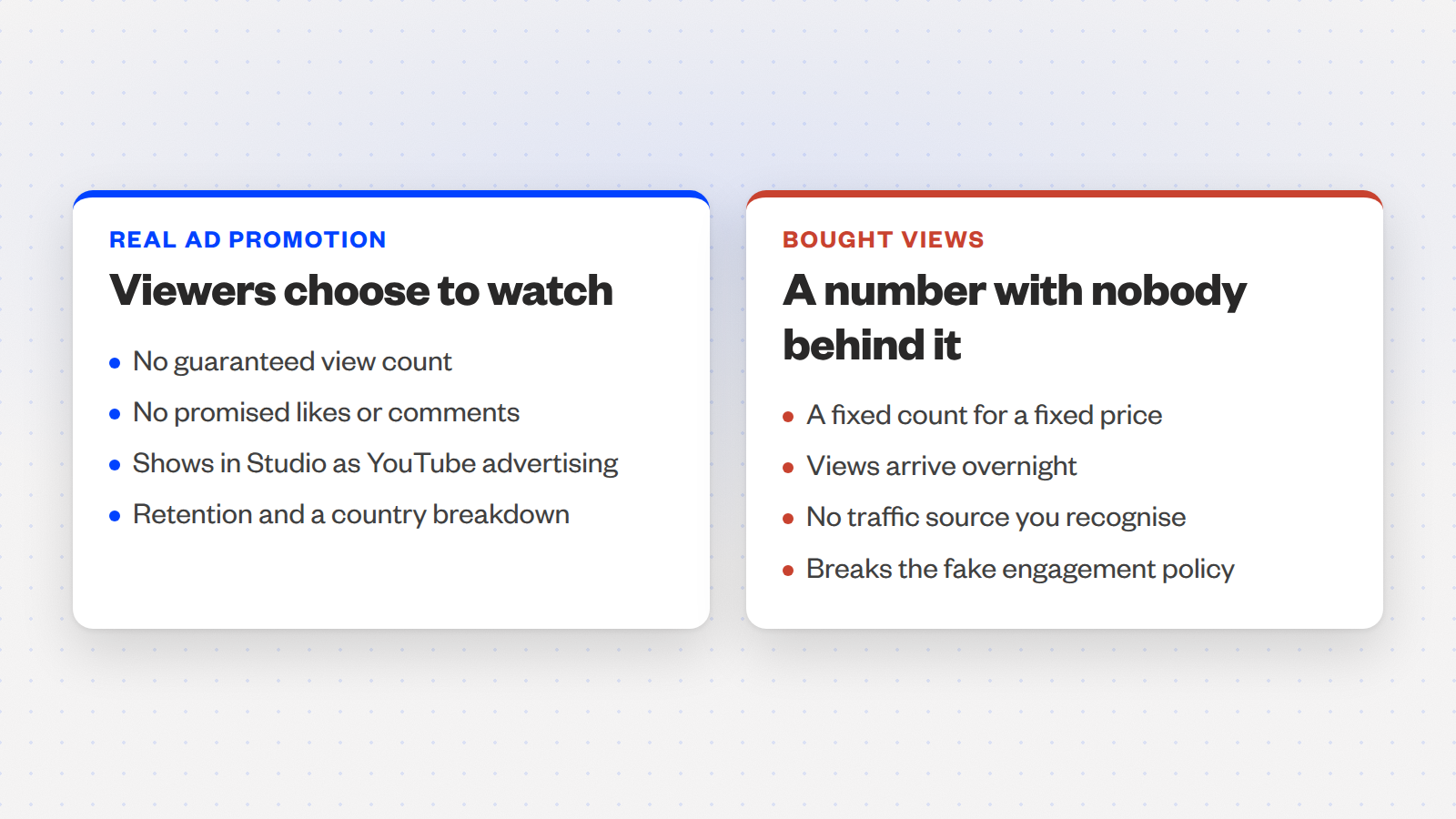
The tells are easy once you know them. Real ad promotion looks like this:
- No guaranteed count. An auction sets the price and a viewer decides whether to watch, so nobody honest can promise a number.
- No promised likes or comments. Those come from viewers, not from a seller.
- A traffic source you can see. Real ad views appear in Studio under “YouTube advertising”, with retention and a country breakdown, because they are real sessions.
If a seller guarantees a number and the views arrive overnight with no traffic source you recognise, you have bought bots. The fake engagement policy puts the channel at risk, and if the goal is reaching monetization, that risk is the opposite of progress.
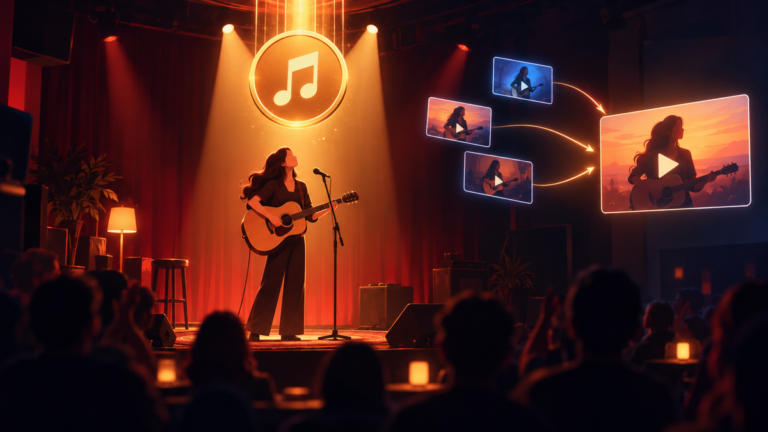
Musicians get the hardest pitch. How to promote a music video on YouTube walks through the release plan and the one-email test that exposes a seller of bot views.
Pay for viewers who choose to watch, and the channel keeps everything they do next.
Common questions
How much does it cost to promote a YouTube video?
You set the budget, and you pay per view rather than per campaign. Third-party 2026 benchmarks put a skippable in-stream view at roughly $0.05 and a Shorts view at $0.10 to $0.30, with crowded commercial niches costing more. Sprizzy campaigns start at $50 as a one-time payment, with no subscription or recurring fees. Country, niche and the video's own hook decide where you land.
Are YouTube promotion views real?
Views a Sprizzy campaign buys through Google Ads are real people who chose to watch. Google only bills an in-stream view after 30 seconds, or an in-feed view after a click or 10 seconds of autoplay, and YouTube's help page states that all views and subscribers gained through a promoted campaign are legitimate. Views sold as a fixed count by a third party are not; YouTube's fake engagement policy bans them.
Does paying to promote a video get you subscribers?
Yes, when you promote a video that already converts. Pick the video with the best subscribers gained per view in YouTube Studio, then target the people most like its existing audience by keywords, similar channels and location. In a February 2026 creator test, one £10 audience-growth promotion produced 30 subscribers while another video with the same budget produced two. The video's own subscribe pitch and retention decide how many you get.
Do promoted views count toward YouTube monetization?
The organic views that follow a promotion do. YouTube calls these follow-on views, defined as viewers watching your videos after seeing your promoted content, and states they count toward Partner Program eligibility. The ad views themselves sit in a separate column, so a promotion earns its way toward monetization through the viewers it brings back rather than the ad plays. Our monetization requirements guide has the full accounting.
How long should a YouTube promotion run?
Three to five days for a first test, which is long enough for the ad auction to settle on a price and short enough that a wrong audience does not cost you a month. Once a test shows good retention and subscribers from the YouTube advertising traffic source, a longer second run on the same video with the winning targeting is where the cheap views come from.
Can you promote a YouTube Short with ads?
Yes. Shorts ads are one of the three formats Sprizzy can run through Google Ads Video view campaigns, alongside in-feed and skippable in-stream, and they appear inside the Shorts feed. Google bills a Shorts view when someone watches 10 seconds, or the whole Short if it is shorter, or taps the call to action. Store Growers' February 2026 benchmark puts Shorts views at $0.10 to $0.30 each, higher than in-stream, because the feed is more competitive.
Is it against YouTube's rules to pay for views?
No, when the views come from ads. Google Ads is YouTube's own ad platform and the one Sprizzy runs on, so paying for ad views is the sanctioned route and the resulting views and subscribers are legitimate. What the fake engagement policy bans is anything that artificially inflates views, likes, comments or subscribers, including third-party services that sell a guaranteed count. The difference is whether a real person chose to watch.