
Will YouTube punish your channel for promoting a video? YouTube has answered that in writing. Below is the answer, the mechanism behind it, how to check it in your own analytics, and the one thing that does put a channel at risk.
Does using YouTube Promotions kill your channel?
No. YouTube’s help page for promotions answers it directly: “No, promotions don’t impact your channel’s or a specific video’s organic performance. Organic recommendations are based on how content performs when it’s recommended organically, not when it’s run as an ad, so promotions will not impact how your content is recommended in YouTube’s typical search and discovery algorithms.”
YouTube’s own words: promotions don’t impact your channel’s or your video’s organic performance.
It covers every ad. YouTube’s reason is about ads in general: a video is ranked on how it performs when YouTube shows it organically. That holds for the Google Ads campaigns Sprizzy runs as much as for a promotion set up in YouTube Studio.
The same page calls every view and subscriber you gain through a promotion “legitimate”, and adds that “a promotion may kickstart a viewer’s relationship with your channel.”
Why don’t ad viewers change how YouTube recommends your video?
Because YouTube ranks a video on each surface by how viewers behave on that surface. Its recommendation system overview lists the signals: what viewers choose to watch, ignore or dismiss, how long they watch, and their likes, shares, comments, “not interested” feedback and survey answers. A viewer who met your video as an ad is weighed differently.
“If people have a very different behavior when they come in through an embed or through an ad or through a link from a friend, if that isn’t predictive of what they’re going to do when they’re shown a video on the home page, it doesn’t make sense for us to weight that information very much.”
That is how YouTube’s senior director of growth and discovery, Todd Beaupré, described home-page ranking in a September 1, 2026 interview on YouTube’s own creator channel.
What that means for you: a viewer who skips your ad is not scored as a home-feed viewer who skipped. Your browse, suggested and search numbers are earned by the people who reach you there.
Where did the idea that promotions kill a channel come from?
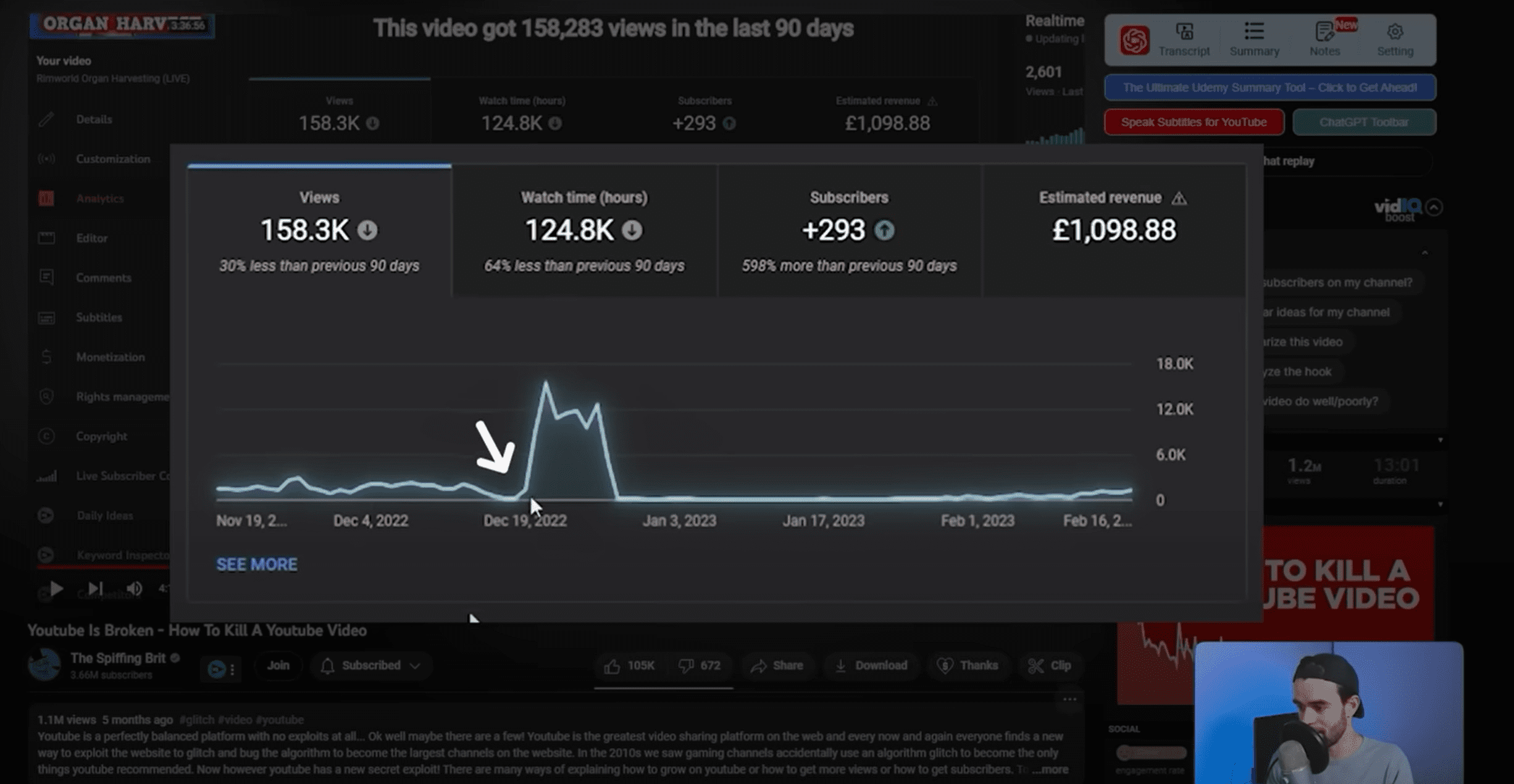
Mostly from one viral video. Premiered on March 27, 2023, and past 1.3 million views by November 2026, it argued that anyone could run deliberately mistargeted ads on another creator’s video, flood it with viewers who click away, and trick the algorithm into throttling it. Repetition shortened that to “ads hurt your channel”.
Two things get lost in the shortening. The video is about weaponized, badly targeted ads pointed at someone else’s video, not a creator promoting their own work to a relevant audience.
And its evidence was one chart: daily views in the low thousands before the ads, a spike of about a week, then close to zero. Read closely, the daily line was already sliding before the spike began.
Creators on Reddit argue about this too; here is what Reddit found on whether YouTube promotion hurts your channel.
What happened when one creator bought five million views four ways?
Nothing in it showed ad views damaging the channel. A YouTube growth creator in Australia bought about five million views through four methods and published the analytics, written up again in February 2026. The test found no strong evidence that paid views permanently damage organic reach, and the four methods behaved very differently, which is the part most summaries skip.
| Method | What it is | What the test found |
|---|---|---|
| Bot views | Automated plays from a view-selling site, under $3 per thousand | The view count rose. Watch time, subscribers and click-through rate barely moved. |
| “Real people” views | A seller’s views marketed as human, at a higher price | Viewers stayed briefly and did not engage. |
| YouTube Studio Promotions | YouTube’s simplified ad tool, on a small budget | Plenty of impressions, modest views and a noticeable jump in subscribers. |
| Google Ads campaigns | Skippable in-stream and in-feed ads | The bulk of the five million views, delivered by YouTube’s ad system to real people. |
The useful conclusion: ad views introduce the video to new people, and the recommendation lift that follows is earned by how those people respond. Ads find the audience; the video keeps them.
What the promoted videos’ own analytics showed
The creator shared the traffic-source chart from three of the promoted videos. In each one, the organic lines keep their shape while the paid line arrives and then stops.
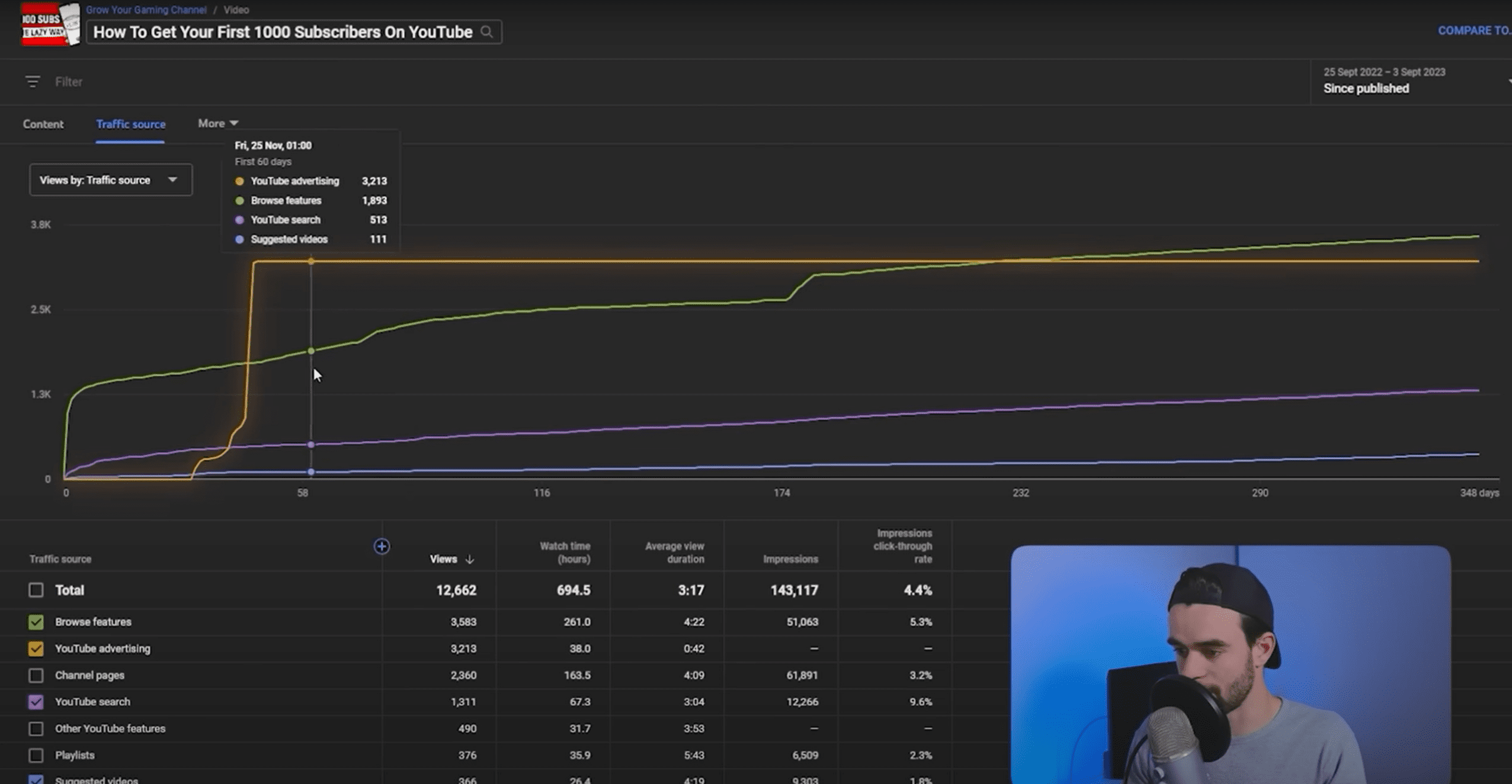
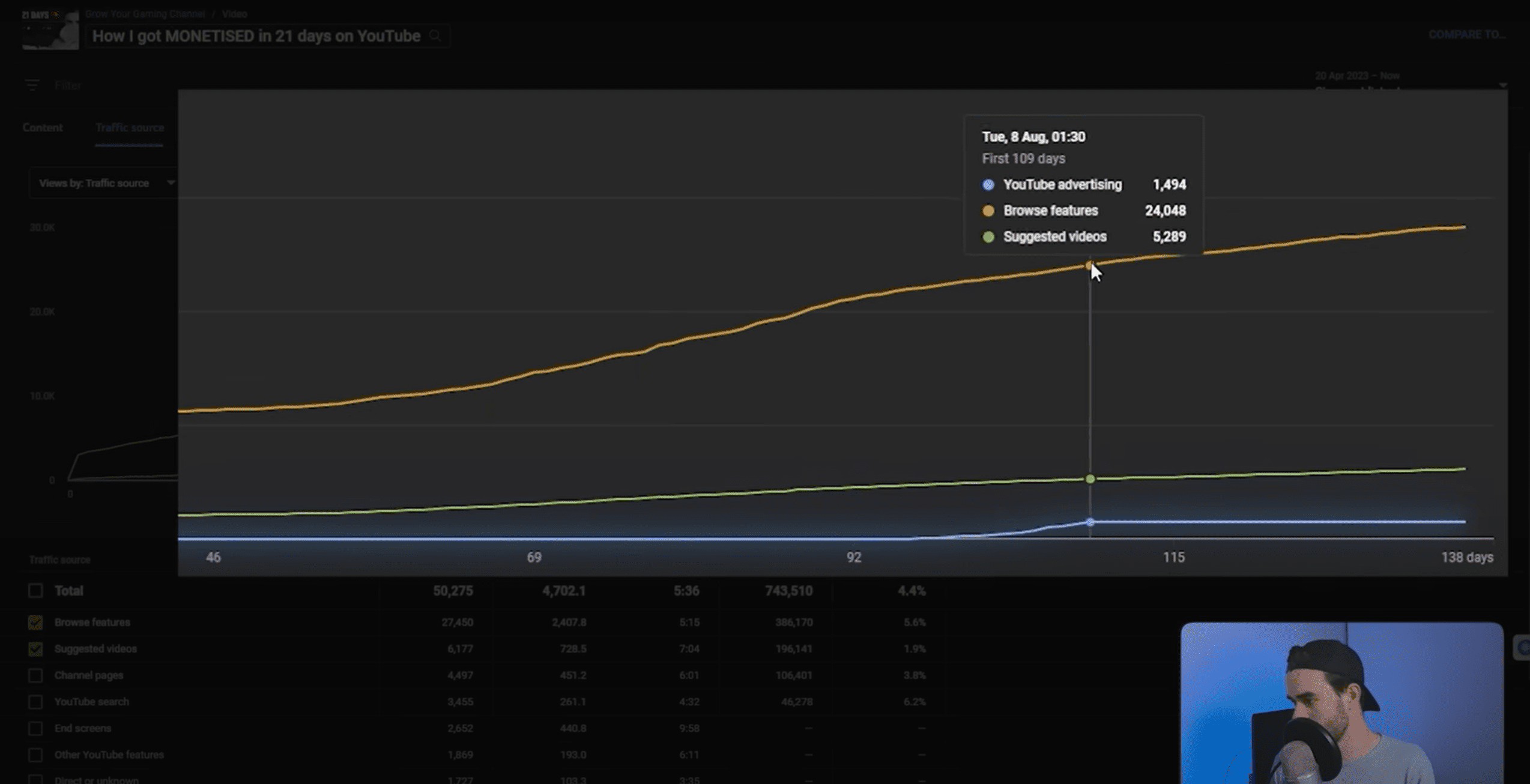
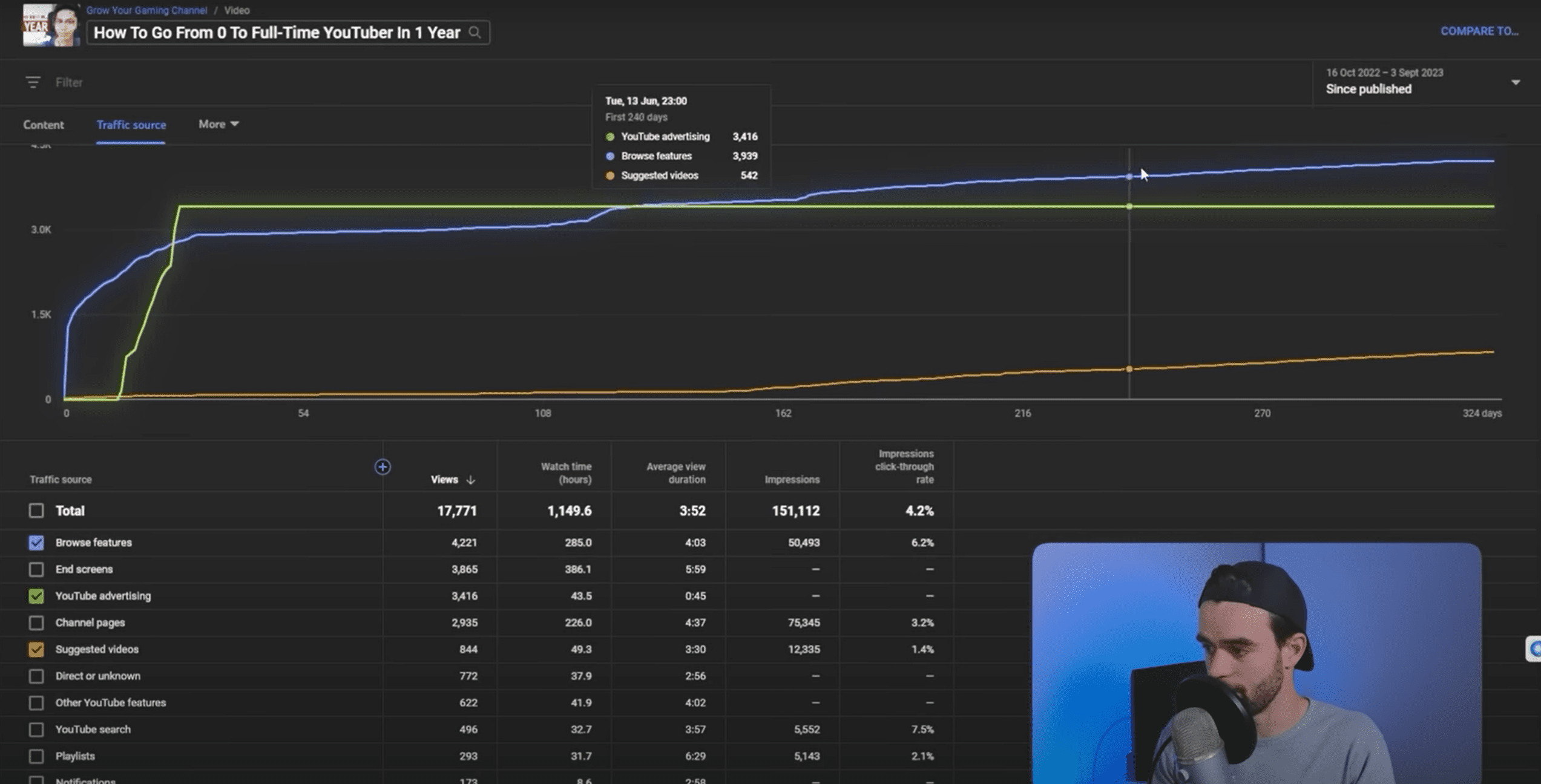
Why the video decides: ad viewers arrive cold, and the ones who stay are the ones who send organic signals. So the targeting has to find people who would choose to watch.
How do paid and organic views compare in YouTube Analytics?
They are counted separately, so you can compare them side by side. In YouTube Studio, the “How viewers find your content” report lists “YouTube advertising” as its own traffic source, and on desktop an “Organic & paid traffic” filter splits views, likes and comments into unpaid and paid. YouTube documents both on its content performance page.
Paid views clear a higher bar. Google Ads counts a paid view only when a viewer stays long enough or interacts, per YouTube’s page on ads and view metrics:
| Ad format | When Google Ads counts a paid view |
|---|---|
| Skippable in-stream | Viewer watches 30 seconds, or to the end if shorter, or clicks an element of the ad |
| In-feed video | Viewer clicks the thumbnail to the watch page, or watches the inline autoplay for at least 10 seconds |
| Shorts ads | Viewer watches 10 seconds, or to the end if shorter, or taps the call to action |
Since August 24, 2026, the public counter adds a view the moment any video starts to play, ads included. Engaged views in Analytics keep the stricter measure, which is why Google Ads, Analytics and the public counter can show three numbers for one promotion.
Google lists the reasons the counts differ: data freshness, spam filtering and eligibility rules. Analytics needs at least 72 hours to update, and invalid-traffic checks can take up to 30 days. See why paid views and Analytics differ and views versus engaged views.
Can paid promotion increase your organic reach?
Yes, through the people it brings. YouTube calls them Follow-on Views: “organic views you get when someone watches your videos after seeing your promoted content.” Its help page for promotions says Follow-on Views count toward YPP eligibility, and Google Ads measures the same behavior as YouTube follow-on views for channels linked to the account.
- The window: Google Ads counts a follow-on view for 3 days after an engaged view of the ad and 30 days after a click.
- Where to see it in Studio: the browse, suggested, search and subscription rows in the weeks after the promotion, read next to the “YouTube advertising” row.
- Why it matters: those views are organic, so the watch time they add moves you toward the 8,000 hours new applicants need from February 1, 2027.
Our guides on follow-on views and monetization and the full monetization requirements cover the checklist.
This is exactly what Sprizzy is for: you pick the video and who should see it, and it runs the promotion on YouTube’s own ad platform, real viewers only, no bots, from $50. It targets by keywords, similar channels, location, age and gender.
Ads find the audience. The organic watching those viewers do next is what grows the channel.
What can actually hurt your channel when you promote a video?
Fake engagement. YouTube’s fake engagement policy bans “anything that artificially increases the number of views, likes, comments, or other metrics either by using automatic systems or serving up videos to unsuspecting viewers,” and it reaches whoever you pay: “If you hire someone to promote your channel, their decisions may impact your channel.”
Enforcement is constant. From April to June 2026, YouTube removed 2,732,395 channels, and 2,310,181 of them (84.5%) fell under spam, deceptive practices and scams, the policy group that includes fake engagement, per Google’s Transparency Report.
Detection is mostly automatic. Of the 11,159,676 videos YouTube removed in that quarter, 11,005,420 (98.6%) were first flagged by automated systems.
A site that sells views by the thousand breaks this policy however “real” it says the views are, and the strike lands on your channel, not the seller’s. Google Ads campaigns are allowed: the ad system shows your video to real people.
How should you read ad viewers in your analytics?
On their own row, never blended. Ad viewers met the video cold, so mixing them into the totals can pull the overall average view duration down in Studio. YouTube judges organic recommendations on organic performance, so that blended figure is not what the algorithm reads.
- Read by traffic source, not in aggregate: compare the “YouTube advertising” row with browse, suggested and search one at a time.
- Expect a different curve. Ad viewers met the video cold, so their watch pattern differs from your subscribers’. That is normal advertising behavior, not a penalty.
- Close the gap with targeting. The closer the ad audience sits to your organic audience, the closer the two retention curves sit.
How do you promote a video without hurting your channel?
Pay only YouTube’s ad system, promote a video that already holds viewers, and aim it at people who would choose to watch it. Then judge it by how those people respond. If you are still deciding whether to spend at all, is it worth paying to promote a YouTube video? walks through a first test.
- Only ever pay YouTube’s ad system. Sprizzy runs every promotion through Google Ads, YouTube’s official ad platform, so every view comes from a real person. Never use a site that sells views by the thousand.
- Promote a video that already retains. Pick one whose organic retention curve is healthy. Ads amplify what is there; the opening still has to hold people.
- Target by interest, not by size. Aim at viewers of similar channels and at keywords your video answers. Broad targeting is exactly the “mistargeted ads” scenario from the 2023 video.
- Prune audiences that do not watch. Turn off placements and audiences that produce short views. Sprizzy does this automatically every hour, and you can remove any audience yourself from the report.
- Read the “YouTube advertising” row on its own. Compare it with your organic traffic sources, and give Analytics at least 72 hours to update. Every Sprizzy view is verifiable in your own YouTube Studio analytics.
Test it with a small budget. Sprizzy promotions start at $50, there are no subscriptions or recurring fees, and your first promotion comes with a money-back guarantee.
If the channel belongs to a business, the setup work comes first: a Brand Account, the channel links, and videos that answer what customers already search for. We covered that in how to use YouTube to promote your business.
The ads put the video in front of the right people, and the video earns the rest. To judge what a promotion is costing you, see what a good cost per view for YouTube ads is.
Common questions
Will promoting an old video hurt my channel?
No. YouTube's statement on promotions covers any video you promote, new or old: organic recommendations are based on how content performs when it is recommended organically, not when it runs as an ad. An older video that already holds viewers is a strong pick, because the people the ad brings in find a proven video and a back catalog to keep watching.
Can a competitor kill my video by running ads to it?
YouTube's own statements say it would not work the way the viral 2023 video suggested. Organic recommendations are judged on organic performance, and YouTube's senior director of growth and discovery has said that behavior from viewers who arrive through an ad is not weighted much when it does not predict how home-page viewers will react. If you suspect it, read Analytics by traffic source.
Is it safe to pay someone to promote my YouTube channel?
Yes, when they buy real ads. YouTube's fake engagement policy warns that "if you hire someone to promote your channel, their decisions may impact your channel," so the method matters. Sprizzy runs every promotion through Google Ads, YouTube's official ad platform, so every view comes from a real person. A seller of views by the thousand puts the strike risk on your channel.
Why did my views drop after a promotion ended?
Because the paid line stopped, not because the organic lines were punished. In YouTube Analytics, split the views by traffic source: the "YouTube advertising" row ends when the promotion does, while browse, suggested and search carry on at their own level. Compare those organic rows with the weeks before the promotion to see what it added.
How long after a promotion should I check YouTube Analytics?
Give it at least 72 hours. YouTube's page on ads and view metrics says Analytics needs that long to update, and invalid-traffic checks can take up to 30 days to complete, which can lower the count Google Ads reports. Read the "YouTube advertising" row first, then watch the organic rows over the following weeks for viewers who come back.
Can YouTube video promotion lead to unexpected costs?
Not with Sprizzy. You set the budget, from $50, and pay once: there are no subscriptions, recurring fees or hidden fees. It is pay per view, so you only pay when a real viewer watches your ad. A promotion can be paused or canceled at any time, and unused funds can be refunded or moved to a new promotion.